Sunday, April 3, 2016

Top 50 Best Traditional Animated Movies of All Time Part 4/5


20. The Jungle Book (1967)
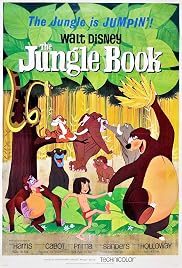
The Jungle Book Poster
Based on the book by Rudyard Kipling, The Jungle Book tells the story of a man-cub named Mowgli (Bruce Reitherman, son of director Wolfgang Reitherman), who was been raised by wolves in the jungle for most of his life. Bagheera the panther (Sebastian Cabot) wants Mowgli to leave the jungle, but Mowgli doesn't want to. When he meets a sloth bear named Baloo (Phil Harris), he teaches Mowgli the "Bare Necessities." Mowgli also encounters other characters like Commander Haiti the colonial elephant, the hypnotic Python Kaa (Sterling Holloway), King Louie the orangutan (Louis Prima), and a quartet of vultures who resemble the Beatles. The Jungle Book was the final movie Walt Disney would be involved with, because on December 15th, 1966, Walt passed away because of lung cancer. It wouldn't be until the late 80s that the Disney Studios would have their magic touch back.
19. Ponyo (2008)
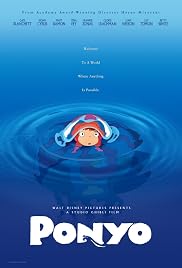
Ponyo Poster
Loosely based on Hans Christian Anderson's The Little Mermaid, Ponyo tells the story of a young goldfish and her quest to become a human. The fish is rescued from a glass jar by a boy named Sosuke. Sosuke and the fish, who he names Ponyo, fall in love. Ponyo's father is a wizard and, against his orders, Ponyo uses her father's magic to become human. This disrupts the natural harmony of the world, and to restore order, Sosuke must pass a test to prove his love for Ponyo. Although this movie is aimed at younger children, there is plenty for older viewers to appreciate, such as beautiful 2D sequences of the magical undersea world. Contrary to popular belief, Ponyo did NOT get nominated for the Oscar for Best Animated Feature. However, Mr. Miyazaki did visit the US to promote for Ponyo. Also, am I the only one who notices similarities between Ponyo's mother and Rose Quartz from Steven Universe?
18. The Little Mermaid (1989)
Disney's first fairytale in 30 years, The Little Mermaid tells the story of a teenage mermaid named Ariel (Jodi Benson), who falls in love with Prince Eric, who is a human. King Triton, Ariel's father, hates humans, and forbids her from going up to the surface. Against her own will, Ariel trades her voice with the sea witch Ursula (Pat Carroll). Before the sun sets on the third day, Ariel has to kiss Prince Eric, but not just any kiss, a kiss of true love. If he does kiss her within that time, Ariel will remain human permanently, but if she doesn't, she'll turn back into a mermaid and belong to Ursula. The Little Mermaid is arguably the best animated Disney feature in years with brilliant animation, memorable characters, and the best songs in a Disney film since the 60s. The Little Mermaid was the last Disney feature to be hand-inked and hand-painted, but started the legendary Disney Renascence, which lasted a full decade. 'Mermaid' also won the Oscars for Best Original Song (Under the Sea) and Best Original Score, the first animated feature to do so since Pinocchio.
17. Watership Down (1978)
Despite being marketed as a family-friendly feature, this is no cute children's tale. Based on the book by Richard Adams, Watership Down tells the often frightening tale of rabbits forced to leave their burrow when one of them has a premonition of disaster. Embarking on a journey to create a new idealized society on Watership Down, they find that life there does not come without a struggle, and the final battle is the goriest scene in the film. Despite its dark tone depicting man and nature's cruelty, Watership Down won the Saturn Award for Best Animated Feature.
16. The Secret of Kells (2009)
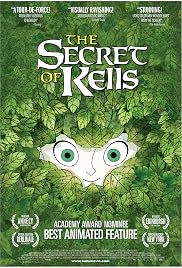
The Secret of Kells Poster
The Secret of Kells tells the story of an Irish boy named Brendan, whose fatherly figure Abbot (Brendan Gleeson) wants Brendan to become chief when he dies. The jovial Aiden knows Brendan is an artist and wants him to inscribe the Book of Kells' ornamental heart. While looking for berries as a substitute for ink, Brendan meets a forest spirit named Aisling (pronounced Ashling). Ten years in the making and produced in five countries at once, director Tomm Moore got visually inspired by Richard Williams and Genndy Tartakovsky. The monster serpent, which comes in later in the film, is based on creatures of the deep. Despite being distributed by a company called G-Kids, this is no kids cartoon. It contains scary images and heavy themes, namely war and religion. Despite the complicated story and adult themes, 'Kells' got nominated for the Oscar for Best Animated Feature, but lost to Pixar's Up.
15. Ernest & Celestine (2012)
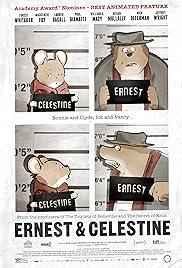
Ernest & Celestine Poster
Based on the books by Gabrielle Vincent, Ernest & Celestine is a French animated film about a mouse named Celestine, who must collect teeth from bears so mice can use them. But when she meets a friendly bear named Ernest, both of them are on the lam, because bears and mice hate each other. The mice are afraid that the bears would eat them, while the bears find them a nuisance. Ernest & Celestine premiered in the US in 2013 and got nominated for the Oscar for Best Animated Feature, but lost to the colossal Disney hit Frozen.
14. Snow White and the Seven Dwarfs (1937)
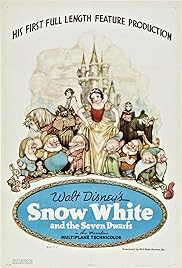
 Snow White and the Seven Dwarfs Poster
Walt Disney's first feature film is about a young girl named Snow White, who is in danger of the jealous Queen. Every day, the Queen speaks to the slave in the magic mirror to find out who the fairest one of all. As long as the mirror said that the Queen was the fairest, Snow White was safe. Fearing that Snow White's beauty would surpass her own, the Queen dresses the princess in rags. When the Queen sends a huntsman to kill Snow White and rip out her heart, the huntsman tells Snow White to run away and never return. Deep within the forest, Snow White befriends a slew of woodland creatures, who bring Snow White to a small cottage. The cottage was sloppy and messy, so Snow White and the animals clean it up. When the owners of the house, seven dwarfs who are named after their personalities, come home, they are at first afraid of Snow White, but when she wakes up, the dwarfs become her friends. Back at the queen's castle, she discovers that the heart the huntsman gave her belonged to a pig, prompting her to kill Snow White herself. When Walt Disney first announced Snow White in 1934, everyone thought "Who would want to see a feature-length cartoon?" Walt made sure that Snow White was a movie unlike any other. The animators worked hard to make the human characters realistic and believable, despite there being only 4 humans in the entire film, while the story team had countless meetings on how the audience would feel. Walt was curious on what people would think if a cartoon character gets killed. Would they laugh or would they cry? Snow White and the Seven Dwarfs premiered on December 21st, 1937, and cost a million and a half dollars to make. When the movie ended, the audience gave a standing ovation. In its first year, Snow White earned 8 million dollars worldwide, and in 1939, Shirley Temple rewarded Walt with eight honorary Oscars for innovation: One full-size statuette and seven small ones.
13. The Triplets of Belleville (2003)
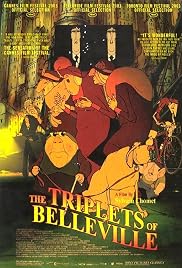
The Triplets of Belleville Poster
 In this charming French film with almost no dialogue, The Triplets of Belleville tells the story of a young Cyclist named Champion who competes in the Tour de France. Champion's grandmother, Madame Souza, acts as his guardian and trainer, and sets out to rescue him when he is kidnapped by a square-shaped Mafioso on a tall, triangular ocean liner. During her adventure, Madame Souza meets an elderly trio of triplet dance stars known as The Triplets of Belleville. 'Belleville' was not only co-financed by companies from different countries, but also had teams of animators scattered across the world, meaning director Sylvain Chomet often had to direct through the Internet and e-mail, an increasingly common way of working. The Triplets of Belleville got nominated for the Oscars for Best Original Song (Belleville Rendezvous) and Best Animated Feature, but lost the latter to Pixar's Finding Nemo.
12. The Girl Who Leapt Through Time (2006)
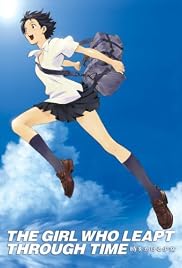
The Girl Who Leapt Through Time Poster
A good way to describe this movie is like Groundhog Day but with a Japanese teenage girl. The main characters are a teen boy and girl named Chiaki and Makoto, who have an easy jocular friendship. One drowsy evening, Chiaki gives Makoto a ride and asks her if they might date, which greatly embarrasses Makoto. Because she's a time-traveler, Makoto resets the scene again and again, trying to steer the conversation away. But Chiaki keeps asking her out, and Makoto's trans-temporal meddling only spoils their friendship. Director Mamoru Hosoda blends witty comedy with can-do optimism, wistful yearning, romantic obsession, and traumatic tragedy, and it actually works quite well. The Girl Who Leapt Through Time premiered in Japan in the summer of 2006 and earned great reviews, even winning the Japan Academy Prize for Animation of the Year.
11. Pinocchio (1940)
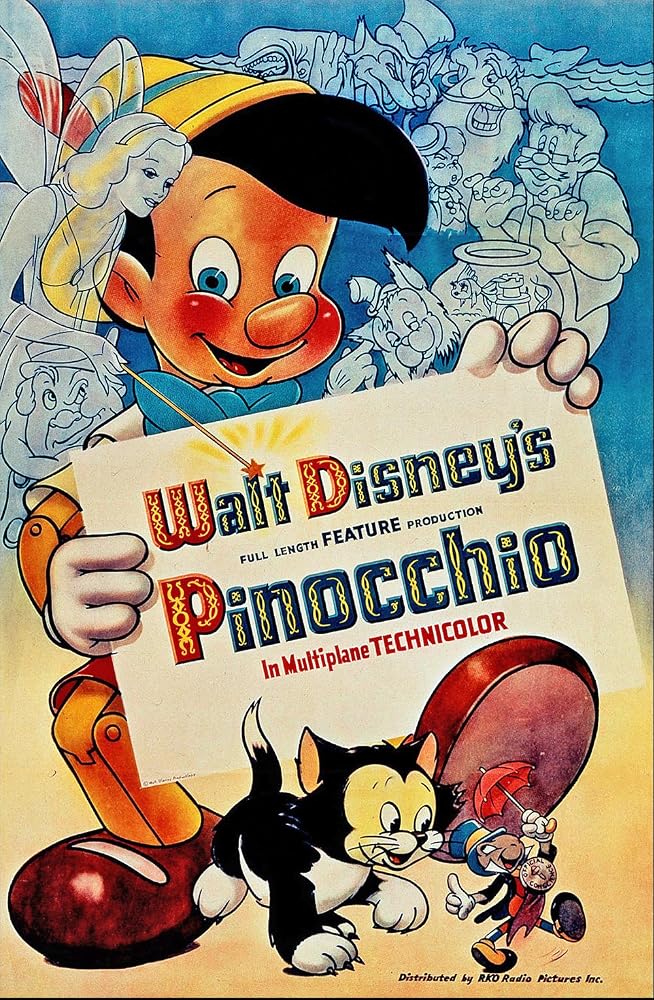
Pinocchio is considered Walt Disney's masterpiece among fans, myself included. Based on the story by Carlos Collodi, Pinocchio is about a lonely, but successful toy maker named Gepetto. One night, when Gepetto wished on a star and wished that his newest creation, a marionette who he named Pinocchio, was a real boy, a beautiful human-sized fairy came through the window and gave Pinocchio the gift of life. Now accompanied by an anthropomorphic cricket named Jiminy (Cliff Edwards), Pinocchio (Dicky Jones) must go on a quest to prove that he is brave, caring, and selfless to become a real boy, while meeting 'temptations' like an anthropomorphic fox and cat named Honest John and Gideon, Stromboli the greedy and bullying puppet showman, and Monstro the Whale, who all the fish of the sea are afraid of. Pinocchio was a very expensive feature, almost twice as expensive as Snow White. The movie had extensive use of the Multiplane Camera, and live-action footage was used for reference. Mel Blanc, famous for voicing almost every Looney Tunes character, was originally the voice of Gideon, but then it was decided that Gideon should be a mute character, and all that remains is a hiccup. Pinocchio got great reviews, though not as good as Snow White, but originally bombed at the box-office. This was because WWII broke out and blocked European markets, and Pinocchio was originally dubbed in only two languages: Spanish and Portuguese. However, it did win the Oscars for Best Original Song (When You Wish Upon a Star) and Best Original Score. Now a days, Pinocchio is considered as not just one of the animated movies of all time, but one of the best MOVIES of all time.

Top 50 Best Traditional Animated Movies of All Time Part 3/5

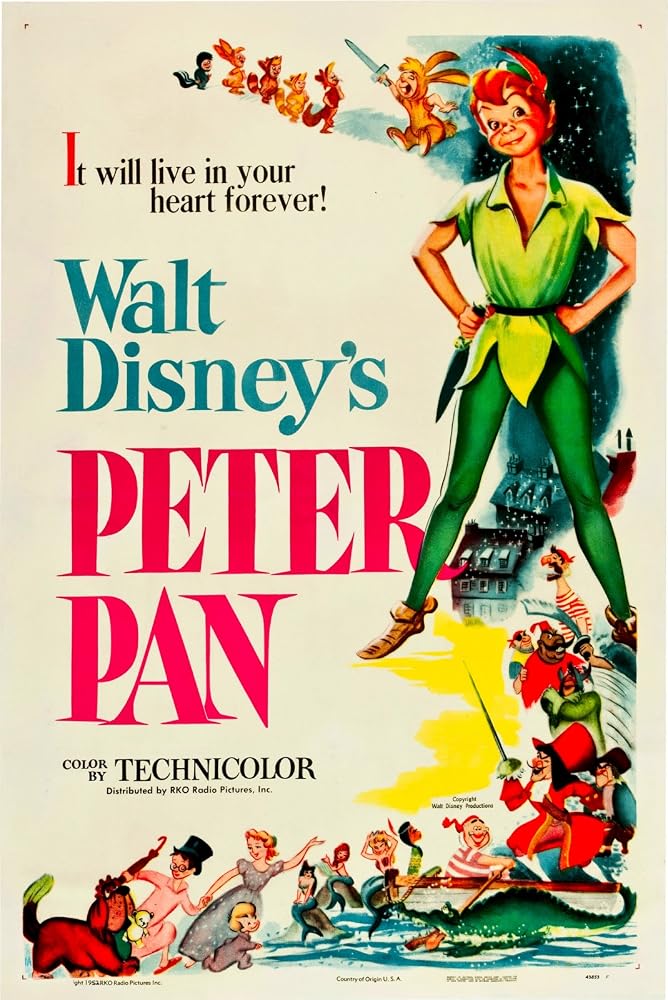
30. Peter Pan (1953)

Peter Pan was Disney's 14th animated movie. Based on the play by J. M. Barrie, Peter Pan tells the story of three British children: Wendy, Michael, and John Darling. One night, a kid in green clothes flew in through the window. He whisks the children away to Neverland, a place where you never grow up. It was inhabited by mermaids, Native Americans, a bunch of lost boys in animal costumes, and the notorious Captain Hook, who is Peter's arch nemesis. Peter Pan isn't a masterpiece, but it is an enjoyable piece of entertainment that only Disney could've made. The character Tinkerbell became popular enough to have her own franchise.
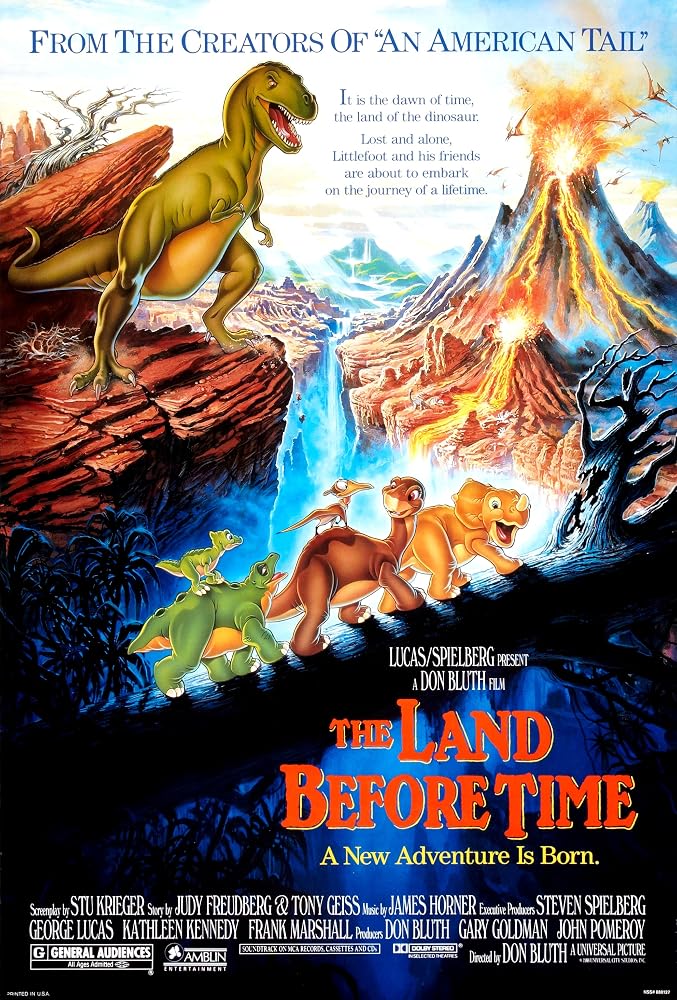
29. The Land before Time (1988)
In the follow-up to An American Tail, The Land before Time tells the story of a young Apatosaurus named Littlefoot, whose mother got killed after a fight with a Tyrannosaurus Rex and an earthquake. Her last words were "Do you remember the way to the great valley?" Now on his own, Littlefoot must make it to the great valley to find his grandparents. Along the way, he meets a Triceratops named Cera, a Parasaurolophus named Ducky, a Pterodactyl named Petrie, and a Stegosaurus named Spike. The Land before Time was one of the shortest animated movies released during the 80s, having a running time of only 69 minutes. This is because there were many scenes featuring Shaprtooth, the Tyrannosaurus. Executive producers Steven Spielberg and George Lucas remarked that it was too scary. "We'll have kids crying in the lobby and a lot of angry parents. You don't want that." Anyway, The Land before Time earned over 70 million dollars at the box-office, got great reviews, and spawned 12 direct-to-video sequels, more sequels than any other animated feature.
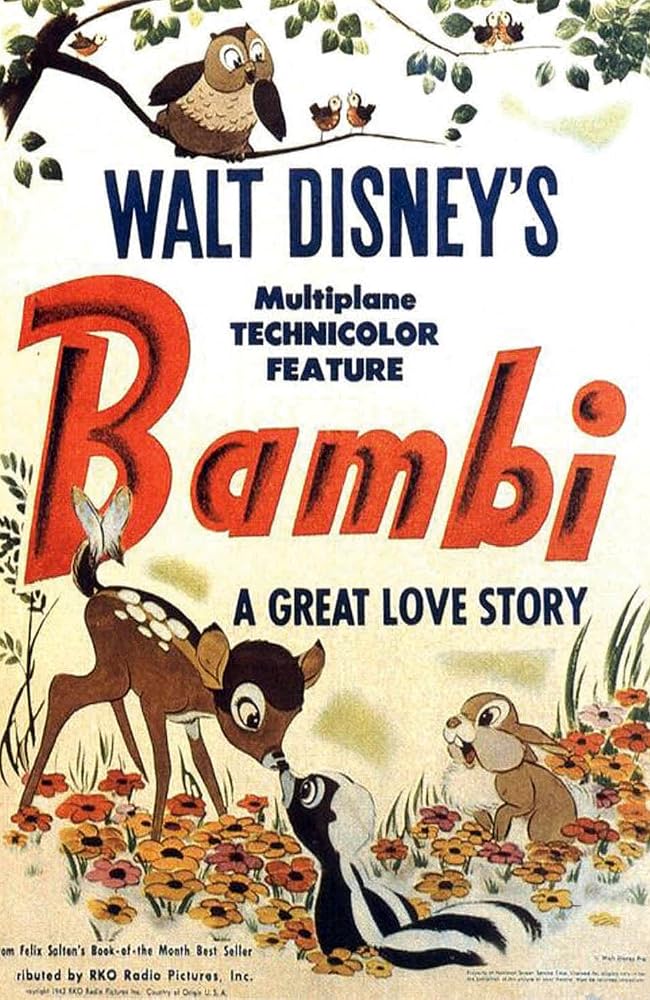
28. Bambi (1942)
Based on the book by Felix Salten, Bambi tells the story of a deer and the animals around him in the forest as he grows to become a mighty stag. While the movie was developed to be less hard-hitting than the book, it does contain some powerful emotional scenes, including the infamous scene in which Bambi's mother gets killed by hunters. In order to make Bambi believable, the animators studied real deer that were brought into the studio, and a mini zoo was set up on site to study other animals. Although Bambi got good reviews, it bombed at the box-office. It was released right during the middle of WWII. Also, some people criticized the film for making humans the antagonists. However, if Bambi were never made, there would be no Land before Time, no Lion King, no DreamWork's Spirit, and no Finding Nemo, because those films would also use extensive research on real animals.
27. Lady and the Tramp (1955)
Lady-and-tramp-1955-poster.jpg
This movie is more than just a love story. It was the first animated feature to be released in Cinemascope, and the first Disney feature to tell a 20th century, urban type of tale. Lady and the Tramp tells the story of a cocker spaniel named Lady, who belongs to a human named Jim. When Jim's wife gives birth to a baby boy, the baby steals Lady's attention, and Aunt Sarah brings Lady to the pet store to put a muzzle on her. Lady escapes and meets the trouble-making Tramp, and together, they go on misadventures involving a trip to the zoo, chasing chickens, and the famous dinner scene at Tony's, the Italian restaurant. Lady and the Tramp was a financial success and earned more money than any Disney feature since Snow White. It is one of the best loved features from the studio, has a universal appeal that transcends all age groups, and has aged quite well..
26. Cinderella (1950)
Cinderella Poster
Cinderella was Disney's first true animated feature since Bambi in 1942, and their biggest success in a while. Based on the version by Charles Perrault, Cinderella tells the story of a young girl named Cinderella (Ilene Woods), who lives with the wicked Lady Tremaine and her daughters Anastasia and Drizella. The only friends she has are mice dressed up like dwarfs. Cinderella wants to go to the ball the Royal prince is having, but Lady Tremaine and the Stepsisters keep giving her chores. Jaq and Gus, two of Cinderella's mice, search the house for the items needed to find the perfect dress. When presented to Lady Tremaine, Anastasia and Drizella think Cindy stole their clothes. They rip apart the dress and Cinderella runs into the garden crying. Upon hearing her crying, Cindy's Fairy Godmother appears. She gives Cinderella a beautiful white dress, turns a pumpkin into a wagon, turns four of the mice into horses, and Bruno, Cinderella's dog, into a human (who doesn't speak when he turns into one). However, the Fairy Godmother warns Cinderella that by midnight, the spell will ware off. The movie succeeds because it remains faithful to the spirit of the original fairy tale while having a Disney touch.
25. The Last Unicorn (1982)
Based on the book by Peter S Beagle, this charming forgotten film from Rankin/Bass tells the story of a unicorn (Mia Farrow) who, upon hearing that she is the last of her kind in the world, goes on a quest to find the rest of her kind. The movie was originally going to be distributed by Warner Bros, but when Ralph Bakshi's The Lord of the Rings flopped at the box-office, Michael Chase Walker, who would become associate producer, was sent back to square one. The project would eventually be picked up by Jules Bass of Rankin/Bass, who had suggested The Last Unicorn as a possible Rankin/Bass production. The movie was animated by Japanese animation studio Topcraft, which would eventually become Studio Ghibli. The musical score and songs were written by Jimmy Webb and sung by the band America. The Last Unicorn premiered in November of 1982, but was unfortunately doomed by the capriciousness of time and marketplace, as well as absolutely no marketing. The movie would be forgotten until many years later when Mr. Walker was lecturing at The College of Santa Fe, and was delighted to learn that so many of his students declared 'Unicorn' as their favorite childhood film.
24. Mulan (1998)
Mulan was the first of three animated Disney movies to come solely out of the Florida Studio. The story concerns a Chinese woman named Mulan (Ming-Na Wen), who runs away from home to dress up as a boy to join the army to serve in her elderly father's place. Guided by the hilarious pint-sized dragon Mushu (Eddie Murphy), Mulan must overcome her fears of failure and dishonor to save China. Mulan got great reviews, but wasn't as successful at the box-office as previous hits like Aladdin or The Lion King. To me, Mulan is a forgotten gem with brilliant animation, a compelling story, catchy songs, and a brilliant score from the late Jerry Goldsmith. Also, when's the last time you've seen a TERRORIST as a Disney villain?
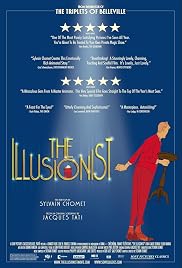
23. The Illusionist (2010)
The Illusionist Poster
Sylvain Chomet's The Illusionist is a followup to his 2003 feature The Triplets of Belleville (see entry #13). The story concerns an aging magician coming to the end of his career in the late 50s, the era that saw the birth of rock and roll and the death of music hall. The story has its origins in an unproduced 50-year-old script by the legendary French director and comic actor Jaques Tati. The original script was for a live-action movie set in Czechoslovakia and starring Tati and his daughter Sophie. Chomet tweaked the script so that the film looked more French, and changed the daughter to a naïve small-town girl named Alice. Also, like 'Belleville', this movie used almost no dialogue. The Illusionist got nominated for the Oscar for Best Animated Feature, but lost to another Pixar film, Toy Story 3.
22. Fantasia (1940)
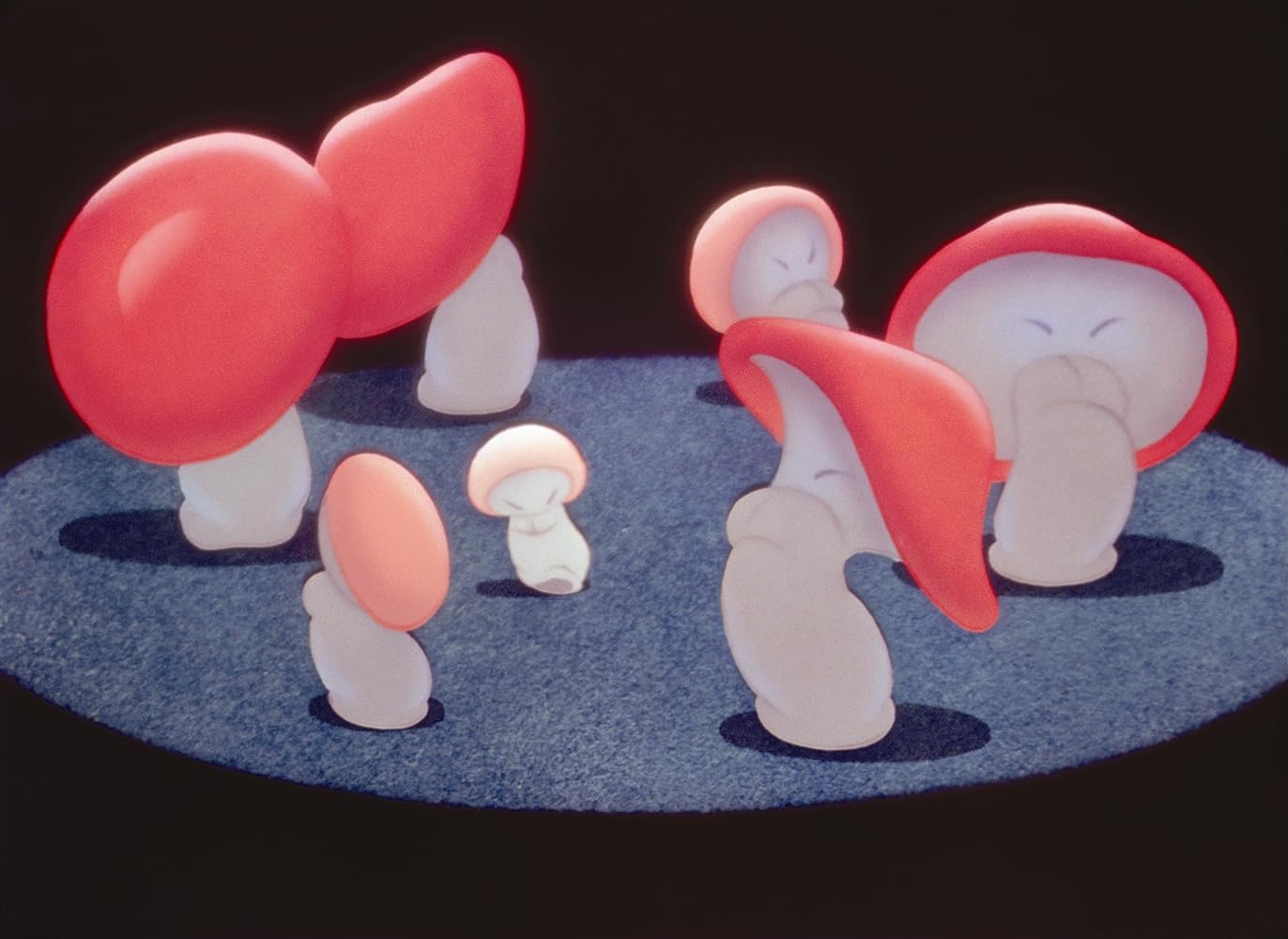
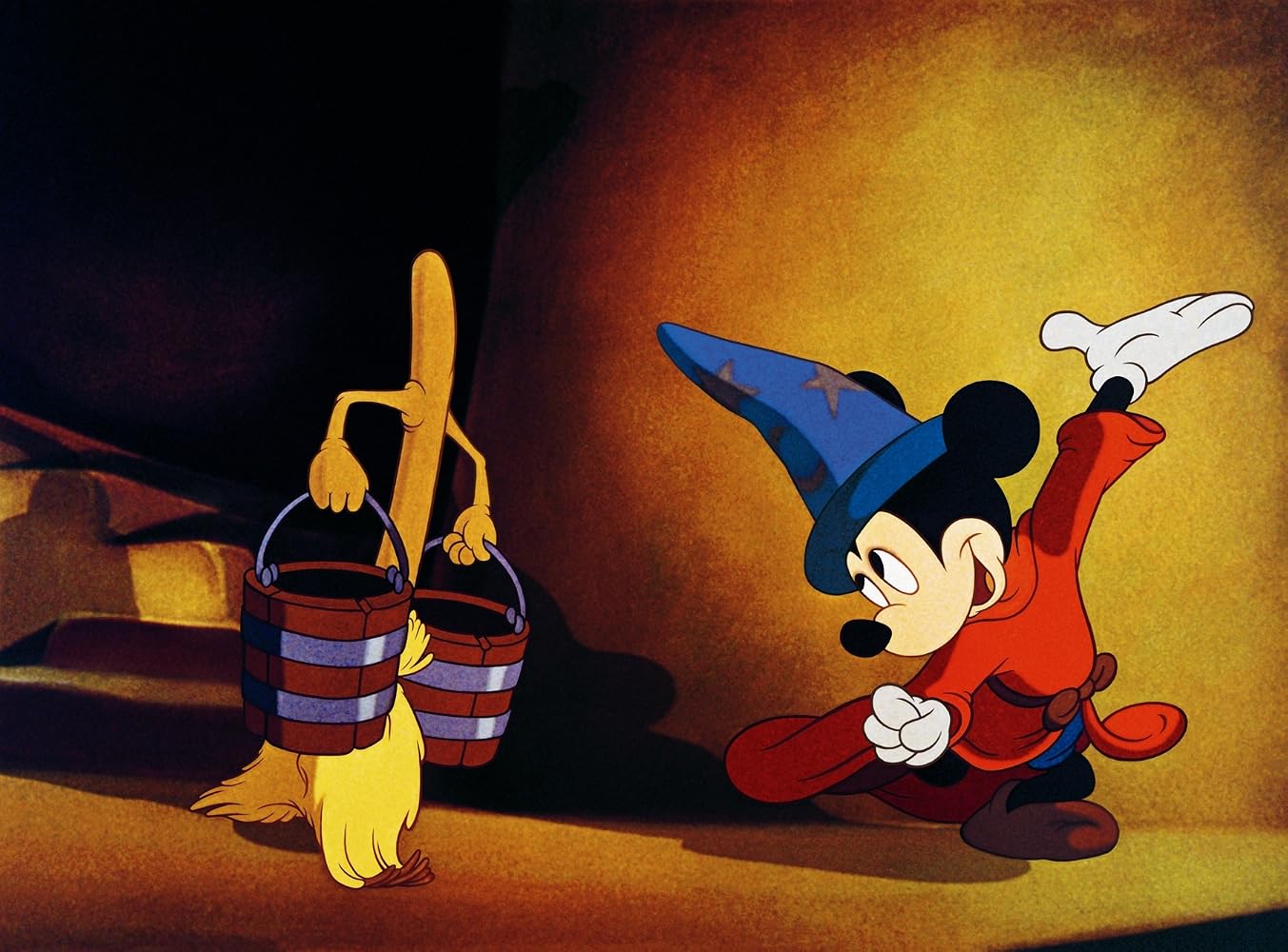
Fantasia started as a short called The Sorcerer's Apprentice, starring a redesigned Mickey Mouse. Walt was pleased by this, and decided it should be made into a feature film. The result: Fantasia, Walt Disney's most experimental film he worked on. The music was conducted by the legendary Leopold Stokowski and the Philadelphia Orchestra, with classical music from legendary composers like Paul Dukas, Igor Stravinsky, Ludwig van Beethoven, and Pyotr Tchaikovsky. The segments in Fantasia included:
•Toccata and Fugue in D Minor, in which various colors and shapes bounced, swirled, and rocked to the beat of Johann Sebastian Bach.
•The Nutcracker Suite, which didn't feature any nutcrackers. Instead, it featured dancing flowers, fairies, and mushrooms as the seasons change into one another.
•The Sorcerer's Apprentice, in which Mickey Mouse is a wizard-in-training and uses his master's best magic tricks to bring a broomstick to life to fill a cauldron up with water, with disastrous consequences. This has become one of Mickey's most famous and memorable roles.
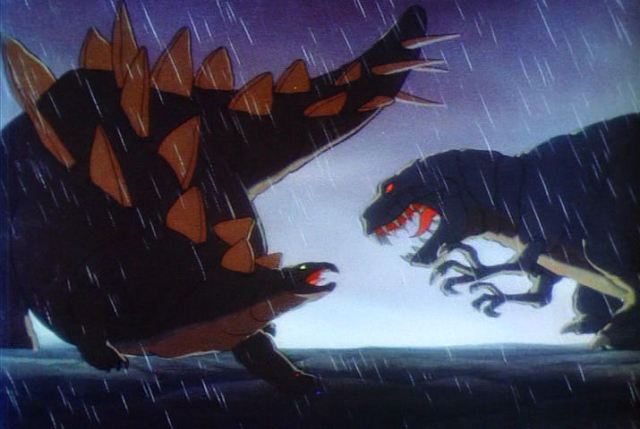
•Rite of Spring, an interpretation of Earth's prehistory, from the birth of the planet to the extinction of the dinosaurs. It's safe to call this segment a precursor to The Land before Time, except the dinosaurs do not talk.
Related image
•The Pastoral Symphony, which features a festival taking place with Greek gods, centaurs, fauns, and other mythical creatures, which is interrupted by the god Zeus hurling lightning bolts. This scene is controversial for the African appearance of the servant centaurs.
•Dance of the Hours, a comedic ballet featuring ostriches, hippos, elephants, and alligators.
•Night on Bald Mountain, in which the demon Chermabog summons various monstrous creatures of the night. He brings lost souls back to life just so he can kill them again.

The segment ends with the tolling of a bell and a procession of monks walking through a forest near the mountain of the accompaniment of Ave Maria.
Like Pinocchio, Fantasia originally bombed at the box-office, but is now considered a classic, a masterpiece even.
21. The Secret of NIMH (1982)
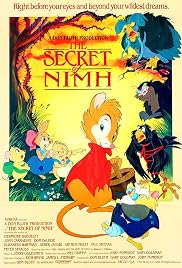
The Secret of NIMH Poster
In 1979, after spending nearly a decade at Disney learning from the living legends of animation, Don Bluth, Gary Goldman, and John Pomeroy set up Don Bluth Productions, later joined by eight more artists. Bluth and his crew used techniques used by Disney during the 1940s, now often abandoned due to issues of time and expense. As well as the highly traditional, full-quality character animation, more painstaking effort was taken with novel visual techniques, like color Xerography and split exposers and diffusion to create shadows, translucency, and reflections. There was also a return to classic, Disney-style use of the multiplane camera. Despite the care lavished on it, the film still only cost about half that of an average Disney feature. Based on the children's book by Robert O'Brien, The Secret of NIMH tells the story of a widow mouse named Mrs. Brisby (Elizabeth Hartman), who must move out of her field because the plow is on its way, but one of her children is sick. They escape with the help of super-intelligent rats who have escaped from NIMH- the National Institute of Mental Health. Mrs. Brisby repays the rats by saving them from extermination by NIMH with the aid of a magic amulet. The Secret of NIMH got generally good reviews, but only performed averagely at the box-office, partially due to having to compete against Steven Spielberg's ET. Impressed by 'NIMH', Spielberg became executive producer of Don Bluth's next film, An American Tail.
EDIT! 10-30-16: Swapped the places the Cinderella and Peter Pan.

Top 50 Best Traditional Animated Movies of All Time Part 2/5

40. Hercules (1997)

Hercules (1997 film) poster.jpg
In Disney's 35th animated feature, Zeus and Hera have a child named Hercules. Hades (James Woods), who fears that Hercules will intrude with his plan on taking over Mount Olympus, sends his devil flunkies Pain and Panic to turn Hercules mortal. However, before he gets to drink the last drop, two adults see Baby Hercules and adopt him. Eighteen years later, everyone in town labels him as dangerous. Wondering to know where he belongs, Hercules sets on a mission to find Phil (Danny DeVito), a satyr who trained wannabe heroes like Perseus, Theseus, Odysseus, and Achilles, and train with him to rejoin Zeus. Hercules got good reviews when it premiered, but like 'Hunchback', it didn't meet box-office expectations. Also, in Greece, people hated it because it didn't stick to the original story.
39. Anastasia (1997)
Anastasia-don-bluth.jpg
In 1994, after the failure of A Troll in Central Park, Don Bluth and Gary Goldman got a promotion from 20th Century Fox to create a new animation studio in Phoenix, Arizona. They both agreed, and thus, Fox Animation Studios was born. Their first feature was Anastasia, based on a real-life event in Russia. The story revolves around a young woman named Anya (Meg Ryan), who suffered from amnesia as a child. When she gets spotted by Dimitri (John Cusack), who is trying desperately to find the real Anastasia Romanov to earn money from the queen, he thinks that Anya is the real Anastasia, and not just an imposter, and brings her to France to prove to the queen that she's the real Anastasia. When the evil Rasputan (Christopher Lloyd) finds out that Anya is still alive, he won't rest until all the Romanovs are dead. Anastasia premiered in November 1997 to glowing reviews, became Don Bluth's most successful animated film, and even got nominated for the Oscar for Best Original Song (Journey to the Past).
38. Dumbo (1941)
Dumbo Poster
After the box-office failures of Pinocchio and Fantasia, Walt Disney decided that they should make a shorter and cheaper animated feature, but still tell a compelling story with brilliant animation. Based on the obscure children's book by Helen Aberson and Harold Pearl, Dumbo tells the story of a baby elephant named Dumbo, who has very large ears. After being made fun of at the petting zoo by a human boy, Mrs. Jumbo, Dumbo's mother, gets furious and slaps the boy's bottom. Because of this, the ringmaster of the circus puts Mrs. Jumbo in solitary confinement. Dumbo seeks out help from a mouse named Timothy, and, through a series of events, learns how to fly with his big ears. Dumbo did very well at the box-office, got great reviews, and won the Oscar for Best Original Score. Dumbo was even going to appear on an issue of TIME magazine, but because Pearl Harbor got attacked by the Japanese military, he got replaced with Admiral Yamamoto instead.
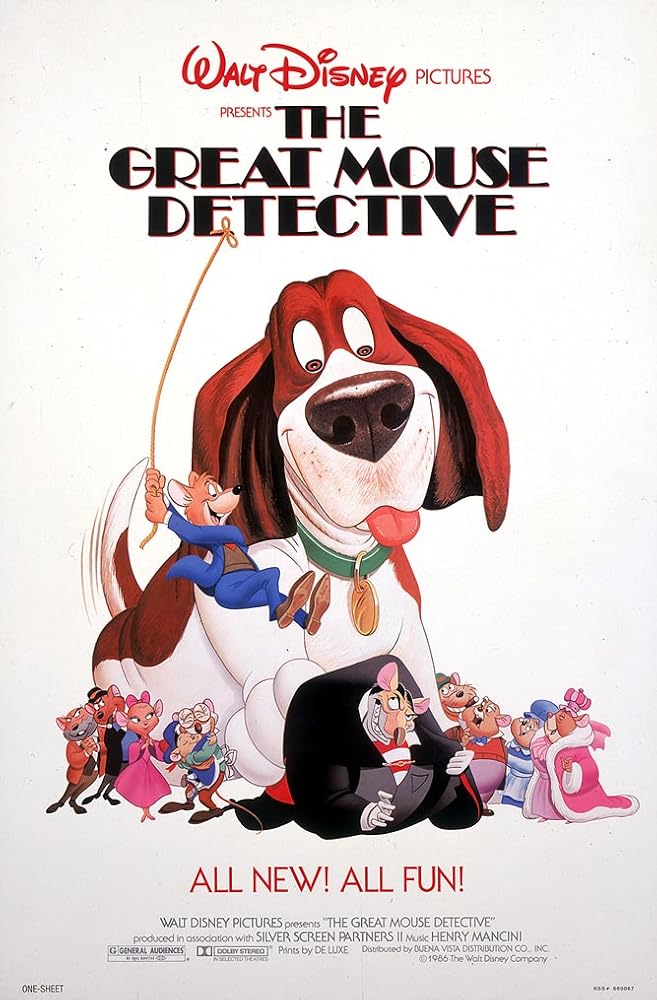
37. The Great Mouse Detective (1986)
After the box-office disaster of The Black Cauldron, Walt Disney Productions lost a ton of money. To top it all off, they were forced to move to a smaller apartment in Glendale, California, and Walt Disney Productions was renamed Walt Disney Feature Animation. During production of The Black Cauldron, some team members wanted to work on a different project. The result: The Great Mouse Detective, the directorial debut of Ron Clements and John Musker, who would later work on Disney classics like The Little Mermaid and Aladdin. Based on the book 'Basil of Baker Street' by Eve Titus, The Great Mouse Detective tells the story of a mouse detective named Basil. Young mouse Olivia seeks Basil's help because her father has been kidnapped by Rattigan (Vincent Price). He wants Hiram Flaversham, Olivia's father, to build an animatronic queen so Rattigan can rule all of England, or at least the mouse population. The Great Mouse Detective did good at the box-office, but was overshadowed by An American Tail.
36. Tarzan (1999)
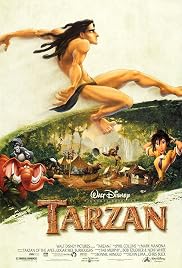
Tarzan Poster
Tarzan was the last animated Disney movie to be released in the Disney Renaissance. Based on the book by Edgar Rice Burroughs, the story is about a human baby who was raised by gorillas. When he reaches adulthood, he sees other humans, including a female named Jane Porter. Clayton, the leader and hunter of the human troop, uses Tarzan to find the gorillas so he can kill them to make a profit. For Tarzan, the filmmakers made a program called the 'Deep Canvas' technique, in which computer generated backgrounds would look hand-drawn, but still feel 3D. This technique would later be used for Atlantis and Treasure Planet. Anyway, Tarzan earned over 400 million dollars at the box-office and won the Oscar for Best Original Song (You'll Be In My Heart).
35. The Fox and the Hound (1981)
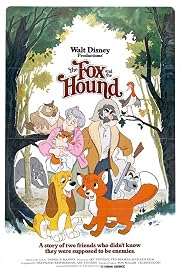
The Fox and the Hound Poster
In the late 70s, Disney's Nine Old Men were considering on retiring, even though the next Disney feature, The Fox and the Hound, was on its way. To makes matters worse, Don Bluth, the most skilled of the younger generation of Disney artists, left to form his own studio. That means the rest of the project required Disney to hire new animators, like Andreas Deja, John Lasseter, John Musker, and Brad Bird. Also, returning from The Rescuers, there was Ron Clements, Glen Keane, and Andy Gaskill. Others listed in the credits include Don Hahn and Burny Mattison. Anyway, The Fox and the Hound tells the story of Tod, a fox, and Copper, a hound, who become childhood friends, but grow up to find themselves face-to-face with the conventional prejudices of the adult world– a world in which foxes and hounds are not supposed to get along. Tod's adoptive human mother has no choice but to release him back into the wild when he becomes an adult. The Fox and the Hound was a transitional movie in that- despite important contributions from the Nine Old Men- it was carried out largely by younger artists, some of whom would be key figures in the Disney Renaissance.
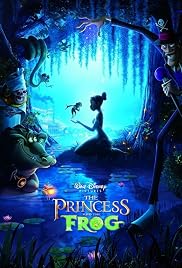
34. The Princess and the Frog (2009)
The Princess and the Frog Poster
In 2004, Disney abandoned hand-drawn animation in favor of the more profitable 3D computer animation. Their first CGI movie WITHOUT the aid of Pixar was Chicken Little, released in 2005. Chicken Little got mainly negative reviews from both critics and fans, but it earned enough money to pay off its budget. In 2006, Disney bought Pixar for 7 billion dollars, and John Lasseter, co-founder of Pixar, became head of Walt Disney Feature Animation, which would eventually be renamed Walt Disney Animation Studios. The first thing he declared is that the directors can use any form of animation they want. John Musker and Ron Clements, who were 2D veterans with The Little Mermaid and Aladdin, decided that there should be a new princess movie, which would lead to The Princess and the Frog. The plot is very hard to explain, so let's just say it's like The Frog Prince with a twist. The Princess and the Frog was Disney's first princess movie since Pocahontas in 1995, and their first hand-drawn feature since Home on the Range in 2004. Princess and the Frog got good reviews, earned 270 million dollars at the box-office, and got nominated for three Oscars, including Best Animated Feature.
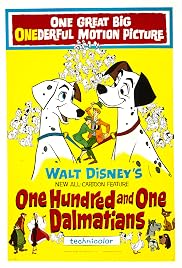
33. 101 Dalmatians (1961)
101 Dalmatians Poster
101 Dalmatians was the first animated feature to use the Xerox process, in which animation cels were transmitted into the machine and copied. Based on the book by Dodie Smith, 101 Dalmatians tells the story of two Dalmatians named Pongo and Perdita. When Perdita gets pregnant with 15 puppies, the villainous Cruella de Ville, who kills animals just so she can wear their fur, tells Roger and Anita, the owners of Pongo and Perdita, that when those puppies are born, they would belong to Cruella. Roger and Anita deny the request, so a few weeks after they were born, Cruella orders her flunkies Horace and Jasper to kidnap the puppies and bring them back to her. When Pongo and Perdita find out that their puppies have been stolen, it is up to them to rescue the puppies. 101 Dalmatians got really good reviews when it premiered, and has become a classic. Cruella is an outstanding over-the-top Disney villain, brilliantly animated by Marc Davis, and is one of the very few Disney villains who doesn't get killed or imprisoned, despite her dastardly motives.
 32. Sleeping Beauty (1959)
 Sleeping Beauty Poster
Six years in the making, Sleeping Beauty was Walt's most expensive movie he worked on. It tells the story of a newborn princess named Aurora, who gets cursed by the evil sorceress Maleficent. She predicts that when Aurora turns 16, she will prick her finger on the spindle of a spinning wheel and die. However, Merryweather, one of the three good fairies, changes the spell so that Aurora doesn't die, but instead goes to sleep, which can be cured by true love's first kiss. To make sure nothing bad happens, Flora, Fauna, and Merryweather, the three good fairies, kidnap Aurora as a baby, rename her Briar Rose, and raise her by themselves. To make sure Maleficent and her raven Diablo don't find out that Aurora is still alive, the fairies decided to raise her without using magic, much to some of their dismay. While Maleficent is a threatening villain, she doesn't have much of a back-story. Why does she want Aurora dead? How did she earn her magic? Also, Aurora doesn't have much of a personality compared to Snow White and Cinderella. Even Anna and Elsa from Frozen have more rounded personalities compared to Aurora! Sleeping Beauty premiered in January 1959 and was a box-office disaster. Critics blandly compared it to Snow White and Cinderella. Thankfully, the next animated Disney feature, 101 Dalmatians, would prove to be more successful financially and critically.
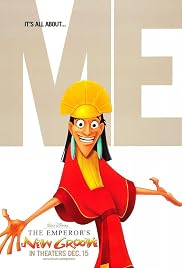
31. The Emperor's New Groove (2000)
The Emperor's New Groove Poster
The Emperor's New Groove was Disney's 40th animated movie, and is considered one of their funniest among fans. The Emperor's New Groove tells the story of a selfish Peruvian emperor named Kuzco (David Spade), who plans on destroying a village to make room for his own amusement park. Enraged after being fired, Yzma (Eartha Kitt) plans on poisoning Kuzco at a dinner party. However, Kronk (Patrick Warburton), her slow-witted flunky, mixes up the potions and turns Kuzco into a llama with red fur. Yzma orders Kronk to put Kuzco in a bag and throw him off a waterfall. Kronk, however, feels like it is wrong to kill Kuzco, so he places the bag on a cart belonging to a villager named Pacha (John Goodman). Now, with the help of Pacha (who Kuzco thinks is the real mastermind behind the whole scheme), he and Kuzco must return to the palace to regain Kuzco's throne, and his human form. The Emperor's New Groove got really good reviews upon its release, but unfortunately, bombed at the box-office. It only earned 60 million dollars on an 80 million dollar budget. However, it did get nominated for the Oscar for Best Original Song (My Funny Friend and Me, which plays during the end credits).
Top 50 Best Traditional Animated Movies of All Time Part 1/5


As a follow-up to Top 30 Greatest CGI Movies of All Time, after almost an eternity, I have finally created the Top 50 Greatest Traditional (hand-drawn) Animated Movies of All Time! HOWEVER, the rules will be stricter, and here they are:
Rule #1: The movie had to have a theatrical release in the US, with the exception of Kiki's Delivery Service.
Rule #2: The movie cannot be based on or be a follow-up to a previous animated TV series.
Rule #3: The movie cannot be rated higher than PG-13 because it’s against my personal policy.
Rule #4: The movie has to entirely, or at least mostly, hand-drawn. Basically, no movies like Who Framed Roger Rabbit, though The Three Caballeros is an exception.
Rule #5: The movie cannot be rated lower than 60% on Rotten Tomatoes, except for The Last Unicorn.
Rule #6: The movie has to be at least an hour long.
Rule #7: The movie cannot be made up of smaller segments, with the exceptions of The Three Caballeros, The Adventures of Ichabod and Mr. Toad, and of course, Fantasia.
Rule #8: No sequels except for The Rescuers Down Under.
ALSO, many of these consensuses I have taken from these three following books.
 The Art of Walt Disney by Christopher Finch
100 Animated Feature Films by Andrew Osmand
The World History of Animation by Stephen Cavalier
Now that is out of the way, let’s start the countdown!
50. Ferngully: The Last Rainforest (1992)
In the continent of Australia, there is a magical forest called Ferngully, where fairies and woodland creatures live in peace and harmony. However, one fairy named Crysta is curious on what lies beyond the rainforest. When she saves and shrinks a human named Zak, she brings him back to Ferngully and they get to know each other. Little does Crysta know that Zak was actually part of a deforestation team, and he accidentally set free the poison demon Hexxus (voiced by the legendary Tim Curry), who is set on destroying Ferngully! Like many Disney movies, the filmmakers went on a research trip to Australia to capture the film's look. All the creatures and plants featured in the movie are real-life species, even the singing goanna (voiced by Tone-Loc), who was inspired by a goanna that director Bill Kroyer encountered. Ferngully did moderately at the box-office, but got mixed reviews. As the years went by, however, it would become a cult classic among fans.
49. The Three Caballeros (1945)
In the early 1940s, the Army took over the Disney Studios and forced them to make WWII propaganda short films. During this time, Walt Disney and a team of artists from the studio traveled to Argentina, hoping American movies would become popular in Latin America. During the trip, Disney and his crew made four shorts films, sewed them together, and created Saludos Amigos in 1943. The Three Caballeros, which premiered two years later, followed a similar concept, but this time, the short films would all connect to the same story. In this case, Donald Duck receives numerous birthday gifts from Latin America, including a visit from a parrot named Jose Carioca and a rooster named Panchito Pistolles. The Three Caballeros was also Walt's first attempt at mixing live-action footage with animated characters since the 1920s. Near the end of the feature, the birds of a feather would ride on a magic carpet and travel to various locations in South America, in real life. Even after the war ended, the Disney Studios would continue to produce package films until the end of the decade.
48. The Rescuers (1977)
After Walt's death in 1966, the Disney Studios were having trouble making animated features. The Aristocats got mixed reviews, Robin Hood suffered from many character designs and animation sequences that were used in previous features, and while The Many Adventures of Winnie the Pooh is enjoyable, it is simply made up of three short films that were made in 1966, 1968, and 1974. However, in the summer of 1977, The Rescuers premiered in theaters, and became a big success. Based on the children's books by Margery Sharp, The Rescuers tells the story of two mice named Bernard and Bianca (voiced by Bob Newhart and Eva Gabor respectively) who set on a mission to save an orphaned human girl named Penny from the greedy Madam Medusa (voiced by Geraldine Page). The Rescuers was the last movie for all of Disney's Nine Old Men to work on, but some of them did work on The Fox and the Hound.
47. An American Tail (1986)
 AnAmericanTailPoster.jpg
After The Secret of NIMH, Steven Spielberg teamed up with Don Bluth to make animated movies that were superior to Disney's at the time. Their first collaboration was An American Tail, which tells the story of a Jewish mouse named Fievel Mousekawitz, named after Spielberg's grandfather. In order to escape from their home country Russia, which was infested with cats, the Mousekawitz family, along with a whole gaggle of mice with varying ethnicities, catch a ride on a human boat heading for America. During a rainstorm, Fievel falls off the ship and gets lost in New York City. During his adventure to find his family, Fievel encounters many characters, like tax collector Warren T. Rat, a French swallow named Henri (Christopher Plumber), and a cat named Tiger (Dom DeLuise), who refuses to eat mice. An American Tail became the highest-grossing Non-Disney animated feature, until it was surpassed by The Land before Time two years later. More will be discussed in entry #29.
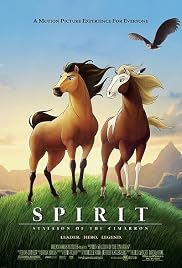
46. Spirit: Stallion of the Cimarron (2002)
 Spirit: Stallion of the Cimarron Poster
Spirit: Stallion of the Cimarron was DreamWorks' third hand-drawn animated feature, and their fifth animated movie in total. The film tells the story of a wild horse named Spirit, who gets captured by cowboys and taken to a Wild West town. Spirit gets rescued by a Native American human, and together, go on an adventure to return Spirit to the wild. Like Bambi and Lion King before them, the animators studied real animals to achieve believability. In this case, they studied horses. 'Spirit' did only modestly at the box-office, probably because it had to compete against the first Ice Age. 'Spirit' is also, so far, the only movie from DreamWorks Animation to have the G-rating, while others were rated PG.
45. The Hunchback of Notre Dame (1996)
 Hunchbackposter.jpg
The Hunchback of Notre Dame is considered by fans, aside from The Black Cauldron, to be the darkest movie from Walt Disney Animation Studios. Based on the novel by Victor Hugo, this movie tells the story of a deformed man named Quasimodo (Tom Hulce), who has been raised in the Notre Dame bell tower for 20 years. The only friends he has are three gargoyle statues named Victor, Hugo, and Laverne. On the Feast of Fools, Quasi asks his boss and caretaker, Judge Claude Frollo (Tony Jay), if he could go. Frollo resents, but Quasi sneaks out anyway. When the townspeople see Quasi, they laugh at his ugliness and throw fruits and vegetables at him. However, he gets rescued by a beautiful gypsy named Esmeralda, and she helps him escape. Enraged by this, Frollo seeks revenge by burning down all of Paris to find Esmeralda so he can kill her. 'Hunchback' got exceptional reviews, but unfortunately didn't meet box-office expectations, maybe because of its dark tone and themes.
44. The Rescuers Down Under (1990)
 
The Rescuers Down Under was the first Disney movie to use the CAPS system, which stands for Computer Animation Process System. That means the characters and backgrounds were colored digitally, but were still hand-drawn. Disney would continue using the CAPS system until 2004. Anyway, The Rescuers Down Under continues the adventures of Bernard and Bianca (once again, Bob Newhart and Eva Gabor), in which they have to rescue a boy in Australia named Cody, who was taken hostage by poacher Percival C McLeach (George C. Scott) and his pet goanna named Joanna (Frank Welker). McLeach kidnapped Cody because he had a feather that belonged to a golden eagle that is worth a fortune. The Rescuers Down Under is a very enjoyable follow-up to the original 1977 movie, with breathtaking animation, great music by Bruce Broughton, a threatening villain, and a hilarious albatross named Wilbur, voiced by the late John Candy. The movie unfortunately bombed at the box-office, most likely because it premiered the exact same day as Home Alone.
43. The Prince of Egypt (1998)
 Prince of egypt ver2.jpg
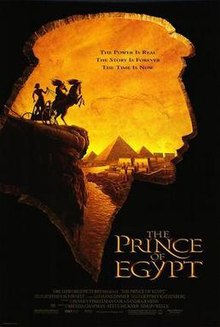
Antz may have been the first movie to be released by DreamWorks Animation, but their first true film was The Prince of Egypt. The movie told the story of Exodus as a musical, and starred the voices of Val Kilmer, Sandra Bullock, Michelle Pfeiffer, Steve Martin, Martin Short, Jeff Goldblum, and Danny Glover. The filmmakers wanted to tell a more grown-up story without using talking animals or zany sidekicks like how other studios were doing it at the time. 'Egypt' was also the American animated movie to have a female director, Brenda Chapman. The Prince of Egypt premiered in December 1998, got really good reviews, and earned over 200 million dollars worldwide. It also won the Oscar for Best Original Song (When You Believe).
42. The Adventures of Ichabod and Mr. Toad (1949)
 Ichabodposter.jpg
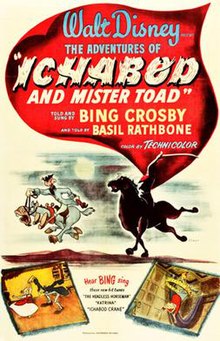
This was the only other Disney package film I chose for this countdown. It comprises of two half-hour segments: Wind in the Willows and The Legend of Sleepy Hallow. Wind in the Willows, based on the children's novel by Kenneth Grahame, tells the story of a wealthy toad named Thaddeus J Toad, who has a habit of reckless driving. However, his driving would lead him to lawsuits and big financial trouble. The Legend of Sleepy Hallow, based on the story by Washington Irving, tells the story of a lanky, yet gluttonous teacher named Ichabod Crane. When he calls in love with the beautiful Katrina van Tassel, Brom Bones gets jealous. To get Ichabod Crane away from his girl, Brom Bones scares him by telling the story of the Headless Horseman. Ichabod scoffs at the thought and leaves the tavern on his horse, but soon discovers the legend is true. 'Ichabod and Mr. Toad', along with The Three Caballeros, are probably one of the more memorable package films from the 1940s.
41. Lilo & Stitch (2002)
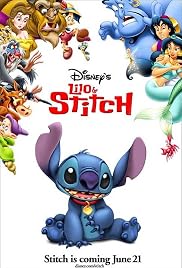
 Lilo & Stitch Poster
After the box-office disappointments of Fantasia 2000, The Emperor's New Groove, and Atlantis: The Lost Empire, Michael Eisner, CEO of The Walt Disney Company from 1984 to 2005, decided that Disney should make a shorter and cheaper animated movie that would hopefully earn a lot of money. The result was Lilo & Stitch, the most successful animated Disney movie during the 2000s. It was also the directorial debut of Chris Sanders, who was a character designer and storyboard artist for movies like The Rescuers Down Under, Beauty and the Beast, The Lion King, and Mulan. In this movie, Dr. Jumba Jookiba (David Odger Stiers) is on trial for creating an illegal genetic experiment nicknamed 6-2-6 (voiced by director Chris Sanders). He is bulletproof, fireproof, can see in the dark, think smarter than a supercomputer, and lift objects 3000 times his own size. His only instinct is to destroy everything he touches! Because of this, the United Galactic Federation plans to send 6-2-6 to a desert asteroid and Jumba to a prison cell. 6-2-6, however, escapes, hijacks a police cruiser, and crash-lands on Earth. The Grand Councilwoman (Zoe Caldwell) has no choice but to send so-called Earth expert Pleakley (Kevin McDonald) and Jumba to Earth and retrieve 6-2-6. Back on Earth, on the island of Hawaii, there live two sisters: 19-year-old Nani Pelekai (Tia Carrere) and 6-year-old Lilo Pelekai (Daveigh Chase). Both of their parents died in a car accident, so Nani is doing all she can to take care of Lilo and trying to get a job. When Lilo mistakes 6-2-6 for a dog and names him 'Stitch', the state of Hawaii gets turned upside-down. Lilo & Stitch did very well at the box-office, got great reviews, and even got nominated for the Oscar for Best Animated Feature, but lost to the Japanese-produced Spirited Away.