Wednesday, February 14, 2024

The Animal Show- Snow Monkey and Puffin Part 2

Jake: And now, let’s see what’s cooking in the kitchen with Yves St. La Roche.

(cuts to Yves in his kitchen, where it’s piling up with snow)

Yves: Bonjour, bonjour little animals out there! Today, since there is so much snow, I decided to show you how to make snow cones. First you grab some snow, which shouldn’t be a problem considering what’s around here. (grabs a pile of snow and puts it on the counter) There, now we need a cone. (goes into the closet to find an ice cream cone) There! And now, voila! The snow is on the cone. If you want to add some flavor, put on sprinkles (puts on sprinkles), chocolate syrup (sprays chocolate syrup), and a cherry (places a cherry on the snow cone). There, a snow cone! And since it’s made of snow and not ice cream, there’s no calories! Bon appetit! (takes a lick of the snow cone)

Jake: And now, from the Atlantic Ocean…

Stinky: Ocean.

Jake: Give it up for Helga the Puffin!
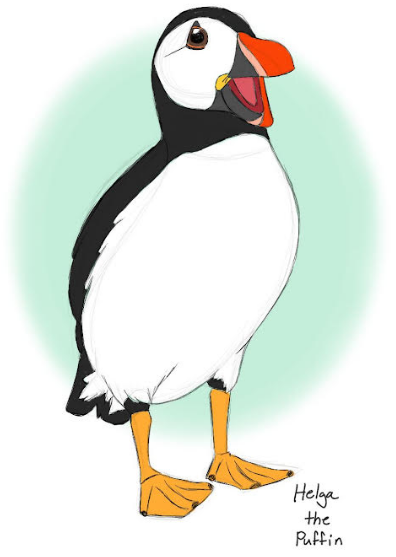
Helga: Hello, Stinky and Jake. It feels a lot like home, doesn’t it?

Jake: Yes, it does!

Stinky: You look like a penguin.

Helga: We get that a lot, Stinky. Want to learn more about puffins?

Jake: Yes, we do!
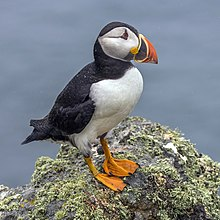
Helga: There are three different kinds of puffins. First, there’s the Atlantic puffin, like me. We breed in Russia, Canada, and Scandivaia. Then, there’s the tufted puffin, found in the North Pacific Ocean.
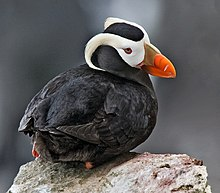
Stinky: That thing looks nothing like you!

Jake: Stinky, that’s not a nice thing to say.

Helga: That’s alright, really. We get that a lot. And finally, there’s the horned puffin.
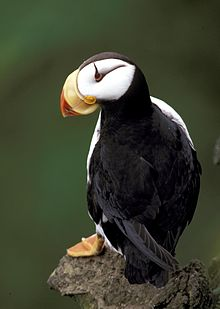
Stinky: I see no horn.

Helga: Those puffins, in fact, have horns. Take a closer look!
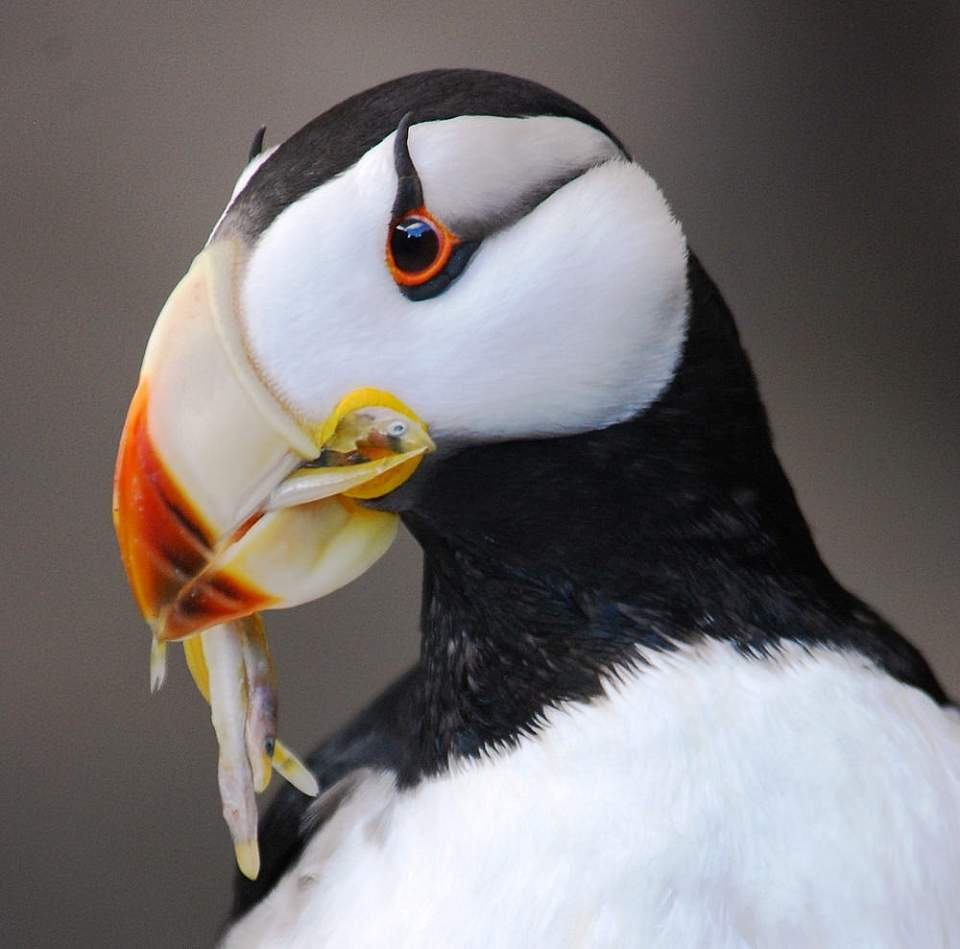
Stinky: Oh, I see! I thought those were eyebrows.

Jake: Now that you’ve told us all about puffin species, tell us about where you live.

Helga: Gladly. First off, we breed on sea cliffs and islands, but we use our strong beaks and feet to dig burrows, which we live in.
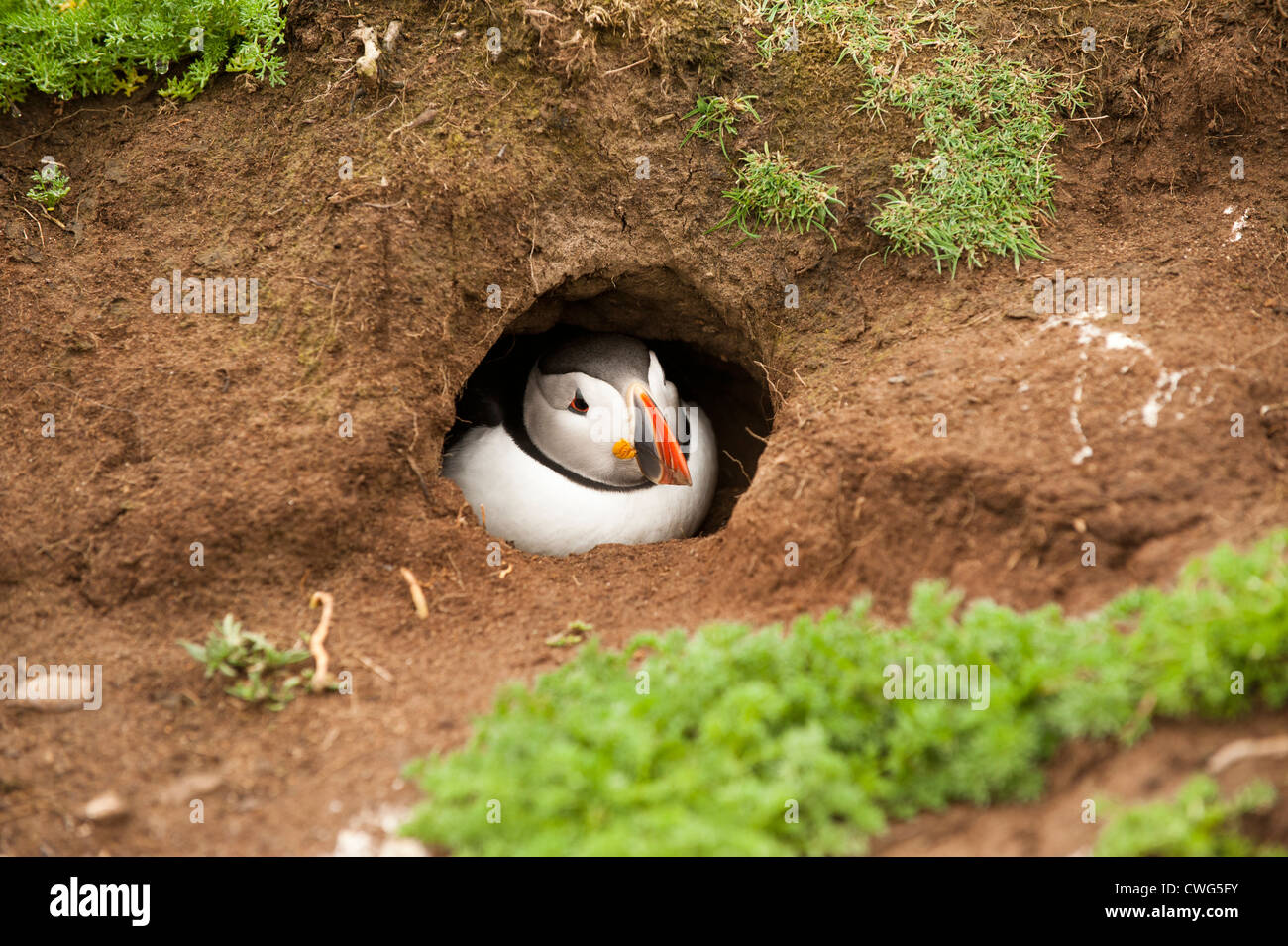
Stinky: A bird living underground? That’s crazy talk!

Helga: It may seem strange to most birds, but this helps us hide our eggs from predators.

Jake: That’s a great strategy. Do you suppose you could sing a song?

Helga: I may not have a good singing voice, but I’d like to.

Jake: And now, here’s Helga singing ‘The Puffin Song’.

Helga: I am a puffin, also called the sea parrot

But I don't really like to eat carrots.

I prefer shrimp, squid, and fish

That's what I prefer to have on my dish!

While other birds lay lots of eggs

We puffins only have one, they can fit under our legs!

We also use our beaks to dig underground

It's a lot safer where there are no predators around!

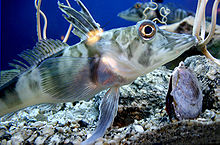
Bunnie: And now it’s time for the Animal Awards! Today, the animal that lives in the coldest habitat. Could it be… the icefish?
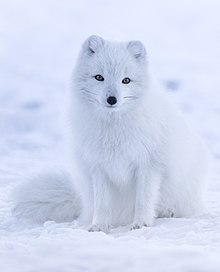
Armstrong: The arctic fox?
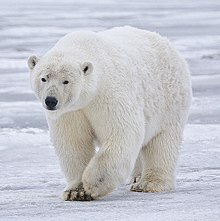
Bunnie: The polar bear?
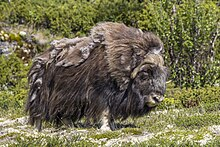
Armstrong: Or the musk ox?
Bunnie: And the winner is… the icefish, which can live in waters as cold as -2 degrees below Centigrade!

Armstrong: Once again, sorry for the loss, Jake.

(cuts to Jake and Stinky with the storybook)

Jake: That’s okay, Armstrong! Besides, I won the Animal Award for Most Colorful Animal before.

Stinky: And I helped him. By the way, what’s today’s story?

Jake: Is Helga still here? It’s about a puffin! (Helga flies over so she can hear the story)

Helga: Would I ever!

Jake: Anyway, this is the story of Peter the Puffin. “Once upon a time, there was a puffin named Peter. Peter had just left the nest and was ready to find a hole to live in. He went to the first hole, only to find out that a rabbit was living in there. So he went to the next hole, only to find out there was a badger in there. Peter flew from hole to hole to find the perfect home, but it seems like they were all taken. Luckily, he found a hole that belonged to a fox that decided to move to a human's backyard. And to this day, Peter is still living in that hole raising his own chicks. The end.”

Stinky: That was a good story, Jake, but can you please put the temperature back to normal?

Jake: Alright. But what are we gonna do with all this snow? (Yves runs by with a toy truck)

Yves: I will take it! My refrigerator could always use more ice, no?

Jake: Since Bunnie will be going to Greenland, I should turn up the thermostat, instead.

Helga: If that’s the case, I’m leaving. (Helga flies out of the studio and back to Iceland)

(cut to Armstrong and Bunnie in front of the habitat door)

Bunnie: Okay, Armstrong. It’s Habitat Time, and today, we’re going to Greenland!

Armstrong: Finally, I’m getting sick of all this snow. It will be refreshing to go somewhere green.

Bunnie: Sorry Armstrong, but Greenland is, in fact, covered in ice!

Armstrong: I was afraid you’d say that.

Bunnie: C’mon, let’s go! (opens the door, and they end up in Greenland)
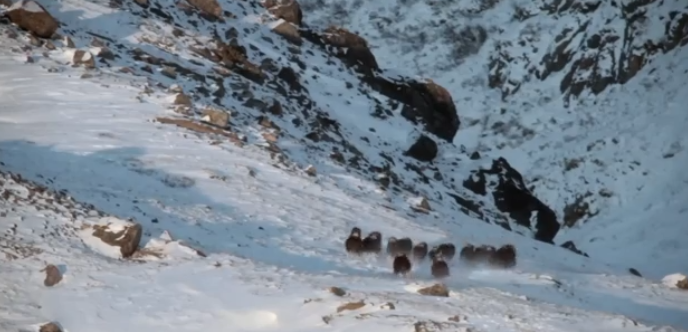
Armstrong: Why is this place called Greenland if it’s covered in ice?

Bunnie: When Vikings first discovered this country, they called it Greenland to confuse it with Iceland.

Armstrong: So Greenland has ice and Iceland has greenery?

Bunnie: Exactly! Iceland, however, is also nicknamed the land of fire and ice.
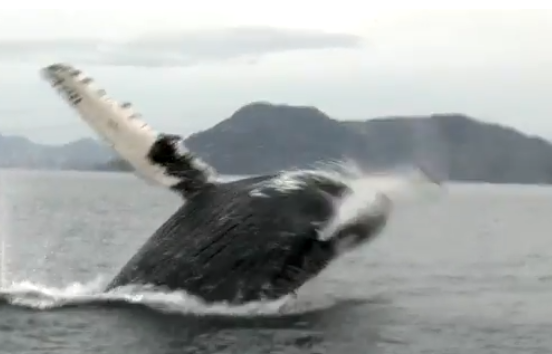
Armstrong: Whoa, I see something in the water!

Bunnie: That’s a humpback whale, Armstrong. They’re native to Greenland’s oceans.
And these are spotted seals, one of six seal species native to the country.
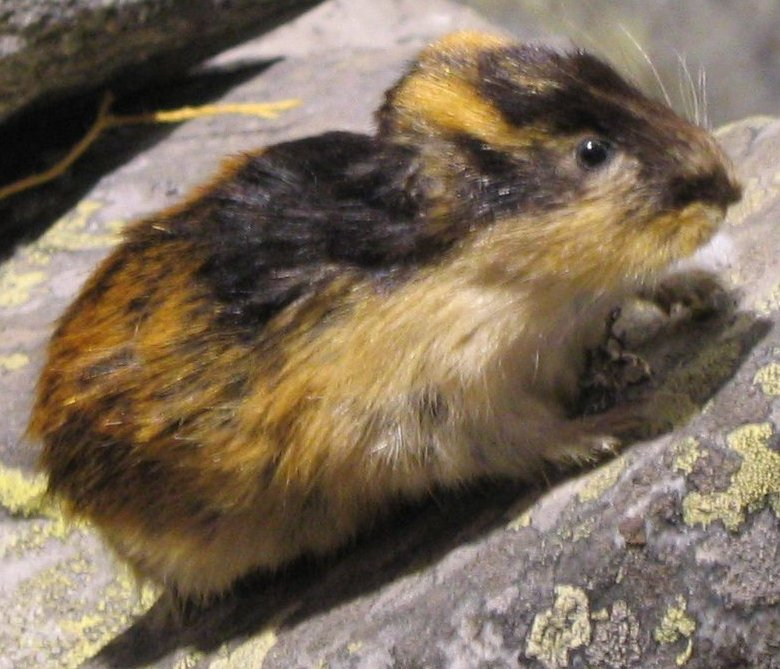
Armstrong: What’s that, a Guinea pig?

Bunnie: That’s a lemming, bird brain! Lemmings lived in cold areas throughout the world, including Canada, Alaska, and Iceland. These guys migrate by jumping off cliffs!

Armstrong: That’s gotta hurt.
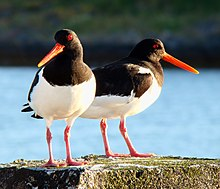
Look at the beaks on these guys.

Bunnie: Those are Eurasian oystercatchers. You can take a guess on what they eat.

Armstrong: Uh, oysters?

Bunnie: Correct!
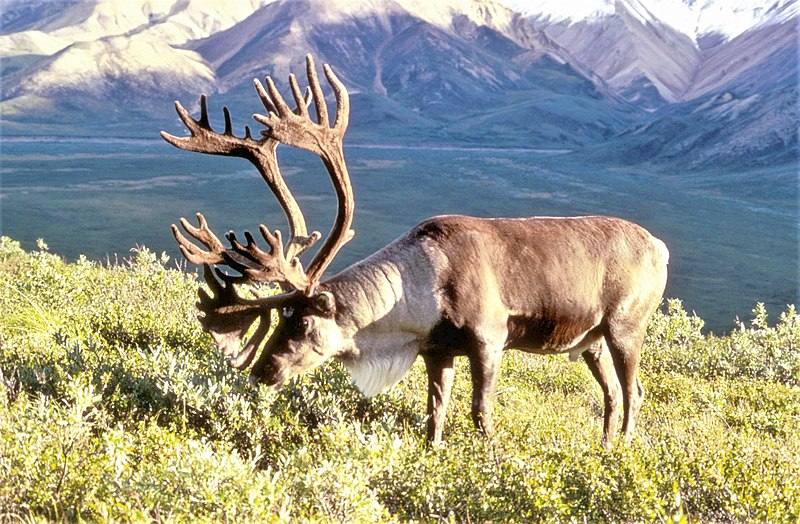
Armstrong: What’s a reindeer doing here? Shouldn’t he be pulling Santa’s sleigh?

Bunnie: Armstrong! Not all reindeer live in the North Pole. They also have homes in Canada, Scandinavia, and even northern Asia.

Armstrong: Speaking of home, can we go back to ours?

(Bunnie and Armstrong leave Greenland and head back to the Animal Show studio)

Bunnie: For Habitat Time, it’s Bunnie Bear-

Armstrong: And Armstrong the chickenhawk.

Bunnie: Just back from Greenland.

(Tizzy flies around Stinky and Jake again)

Tizzy: Tizzy here, and before I ask, why is it warmer?

Stinky: Jake turned the thermostat back to 65 degrees.

Jake: And what’s the quiz this time, Tizzy?

Tizzy: Well, here it is! (cuts to the screen below)
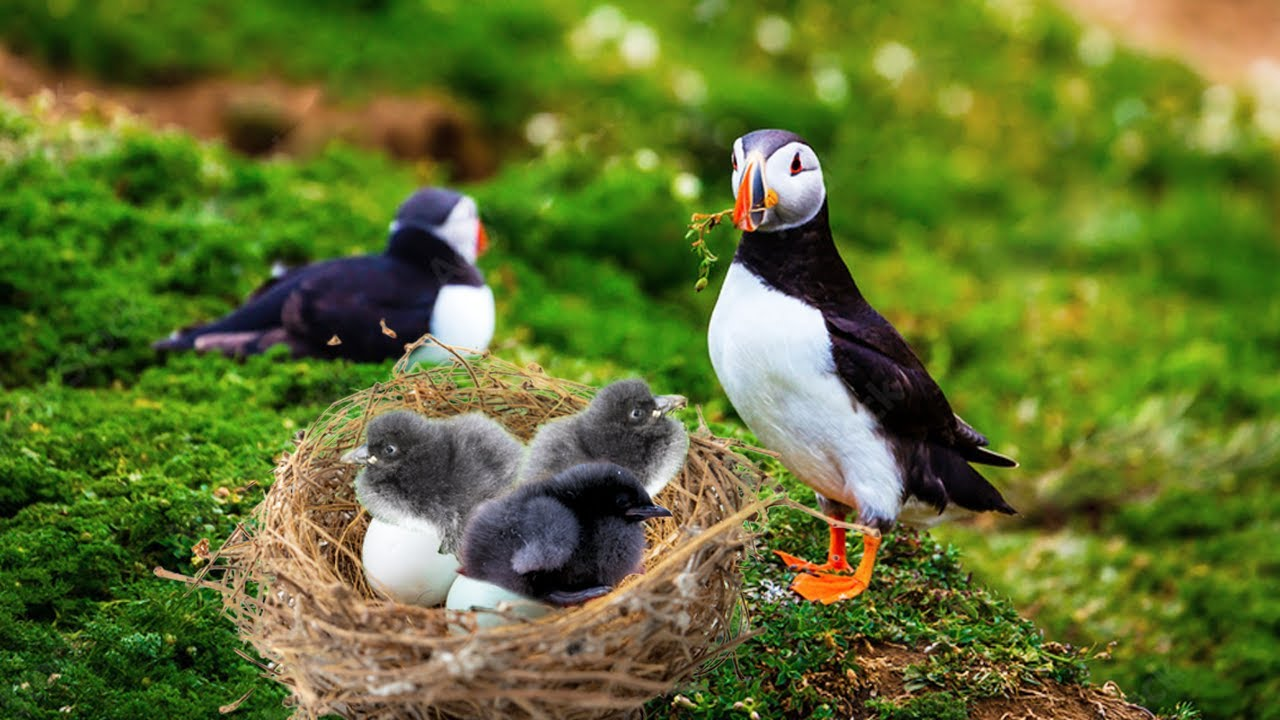
Do puffin dads or puffin moms look after its egg? Give it a think. Back in a buzz!

(cut back to Stinky and Jake, who are having a hard time finding the answer)

Stinky: Do we ever get one of Tizzy’s questions right?

Jake: I don’t think so.

Tizzy: Maybe you should hear the question again. (flies back to the previous scene) Do puffin dads or puffin moms look after its egg? The answer is both of them, as they take turns guarding the egg. Bee-lieve it, because it’s true!

Jake: Thanks for the quiz, Tizzy. That's all the time we have today, and until next time, keep seeing the world through the eyes of animals. (Stinky runs towards Jake with a floaty tube)

Stinky: Jake, look! The ice that Yves forgot to scoop up turned into water, and now we have an indoor pool! (jumps into the pool with Yves and Bunnie swimming while Armstrong is perched on an umbrella)

Jake: Good thing our guests left early. Geronimo! (jumps into the pool and creates a big splash)

Author's Notes: This isn't the first time the Animal Show characters messed with the thermostat. The episode 'Arctic Fox and Camel' had them constantly change it so they can suit the needs of the guests.

https://www.youtube.com/watch?v=iSvmquUuEWg&list=PLifn29u_lcafo7MqUFGnitW79pbWqDb6q&index=30

During Season 1 of The Animal Show, Armstrong and Ollie would first go in what looked like a closest to get ready for whatever habitat they were visiting.
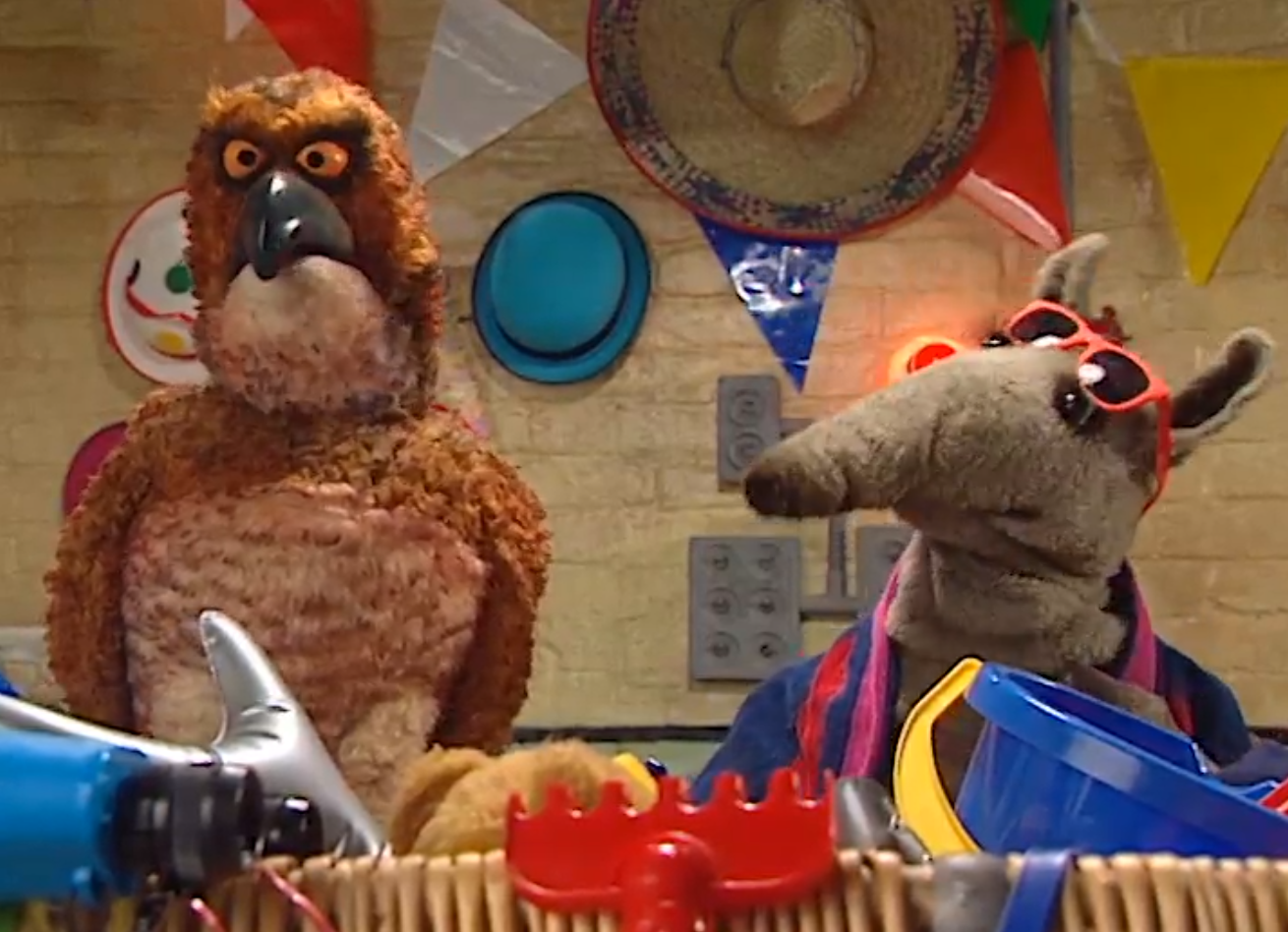
As an added bonus, there was also a handy map that would pinpoint where in the world they were going to visit for Habitat Time.
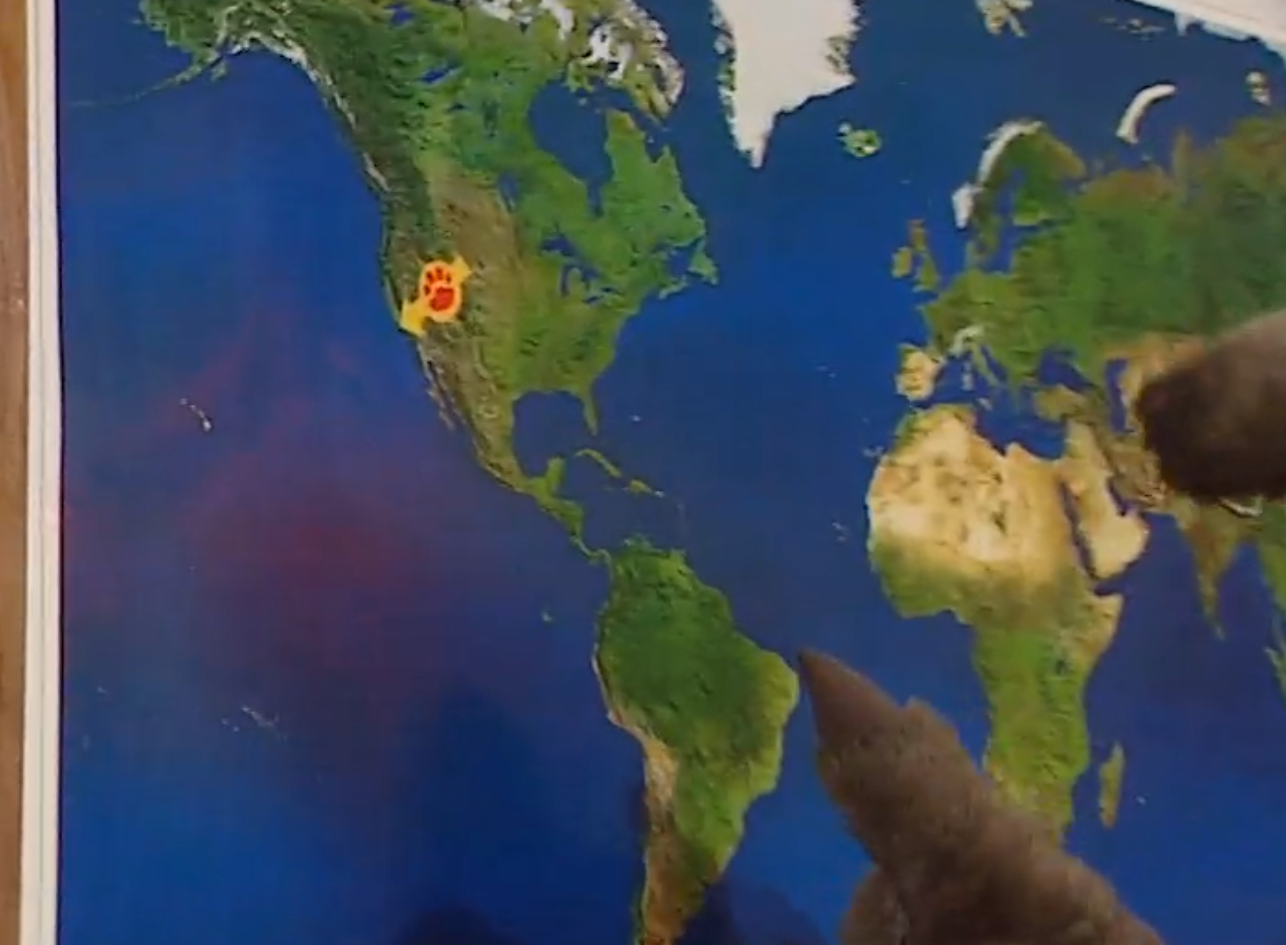
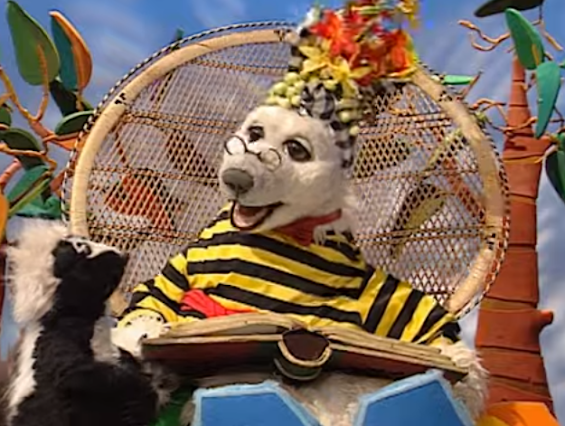
Jake actually did win the Animal Award for Most Colorful Animal in the episode 'Wasp and Blue-Footed Booby', as he wore blue-footed booby slippers, a yellow-and-black T-shirt like a bumblebee, and a fruit hat like Chiquita Banana.
In the next episode, you'll learn all about endangered species when the guests are a red panda and a chinchilla!

The Animal Show- Snow Monkey and Puffin Part 1

Stinky and Jake: Here on the Animal Show.

Here on the Animal Show.

Here on the Animal Show!

Bunnie Bear: From under the ocean, over the clouds, and around the world…

Armstrong the Chickenhawk: Here comes the wild side of wild life.

Bunnie: The Animal Show!

Armstrong: And now, let’s have a wild welcome for your furry friends-

Bunnie: Stinky and Jake!

Stinky and Jake: Now it’s The Animal Show!

Jake: Hello, all you animals out there!

Stinky: I’m Stinky.

Jake: And I’m Jake. And today, we are going to meet the snow monkey and the puffin. Both of these animals are right up my alley, as they both live in cold habitats.

Stinky: That’s awesome, but why is it so cold?

Jake: Oh, about that. Bunnie set the thermostat to 30 Degrees to suit our guests.

Stinky: Why do I have a feeling I’ll regret this?

Armstrong: And now, it’s time for…

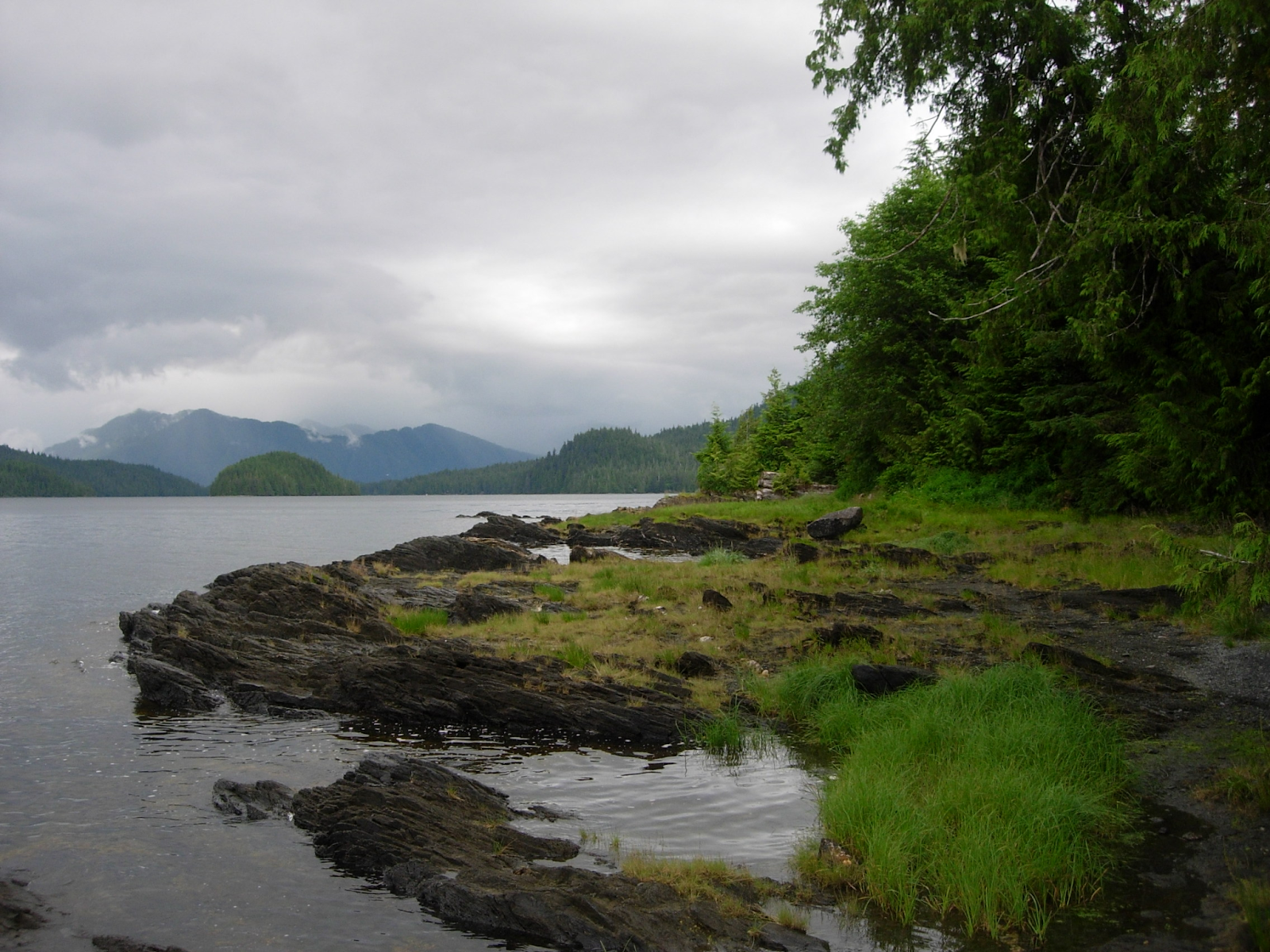
Bunnie: That’s amazing! Today, we look at a rainforest in the last place on Earth you’d expect: Alaska!

Armstrong: Alaska? Are you sure that you meant Australia?

Bunnie: Nope. Alaska!

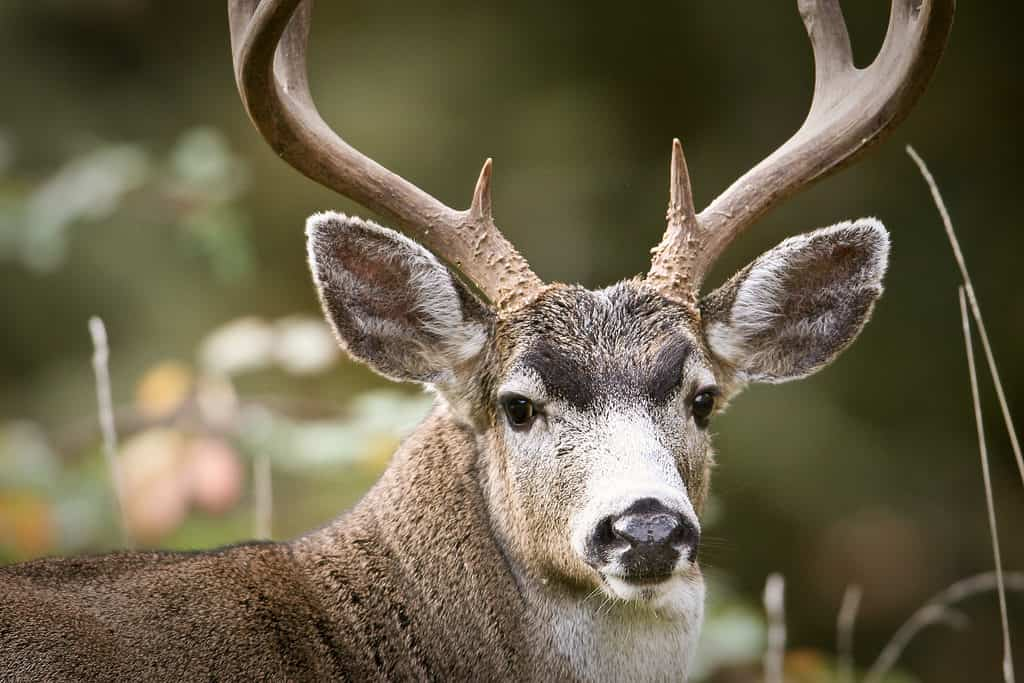
Alaska, in fact, has 5 million acres of pristine old-growth rainforest. Animals here include deer, salmon, bears, martens, and salamanders.

Armstrong: Now, that’s a fact that will make you say…

Stinky and Jake: That’s amazing!

Jake: First up, all the way from Japan…

Stinky: Japan.

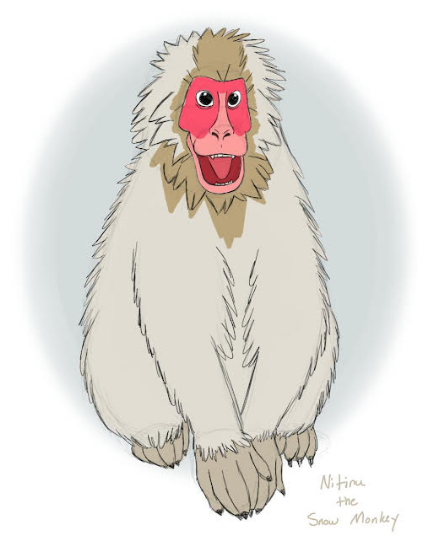
Jake: Please welcome Nitiru the Snow Monkey!

Nitiru: Konichiwa, Pinky and Jake.

Stinky: It’s Stinky.

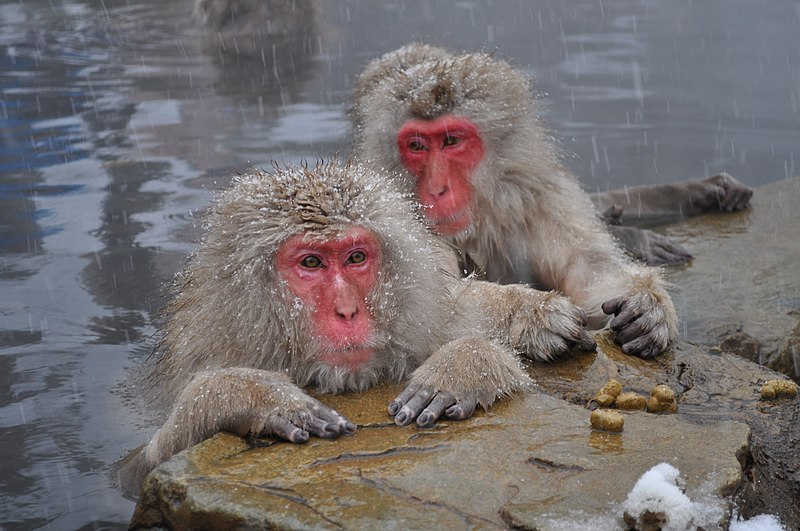
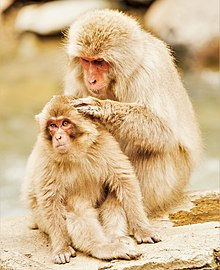
Nitiru: Whatever. Anyway, I want to show you snow monkeys, all the way from the Land of the Rising Sun.

Jake: I thought monkeys can’t swim.

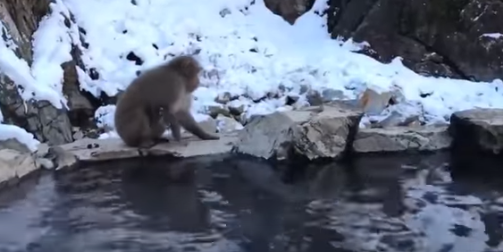
Nitiru: Most monkeys don’t, but we snow monkeys can!

Stinky: And what are you swimming in?

Nitiru: We monkeys have our own hot springs, and that’s how we cool down. We may also huddle together.

Stinky: I know what that is- Grooming!

Nitiru: Correct, my skunk friend! Monkeys in general groom their own kids to get tasty bugs. We also eat bamboo and fish.

Jake: A monkey eating fish? Now I’ve seen everything!

Nitiru: I know, it’s unusual. However, many humans in Japan consider us good luck.

Stinky: I wish I was considered good luck.

Nitiru: Sorry, but I have to go now. It’s starting to get too cold here. (walks off)

Jake: And now, it’s time for…

Stinky and Jake: Baby talk!

Baby snow monkey 1: Why do I have to ride on your back?

Daddy snow monkey: Because you’re not old enough to swim. Besides, you might drown.

Baby snow monkey 2: You know, this isn’t so bad. However, it tastes like monkey fur.

Baby snow monkey 3: Hey, Sugi! What do you call a sika deer with no eyes?

Sugi: Not right now, Taka. I’m having a drink.

Taka (snow monkey 3): No eye-deer! Ha ha ha ha ha!

Sugi: Now you made me lose my concentration! Come back here, you cheeky monkey!

(cut back to Stinky and Jake, with Stinky wearing earmuffs, a scarf, and a coat)

Jake: Stinky, where did you get those earmuffs, scarf, and coat?

Stinky: Remember when Armstrong and Ollie used to have Habitat Time in what looked like a closet? That’s where I found it.

Tizzy: Hi, everyone! Why is it so cold?

Stinky (shivering): Jake and Bunnie set the thermostat to 30 degrees.

Tizzy: If it stays this cold, I’ll have to stay in my hive for the next quiz.

Jake: And what about the first quiz?

Tizzy: Well, here it is! (cuts to the screen below)

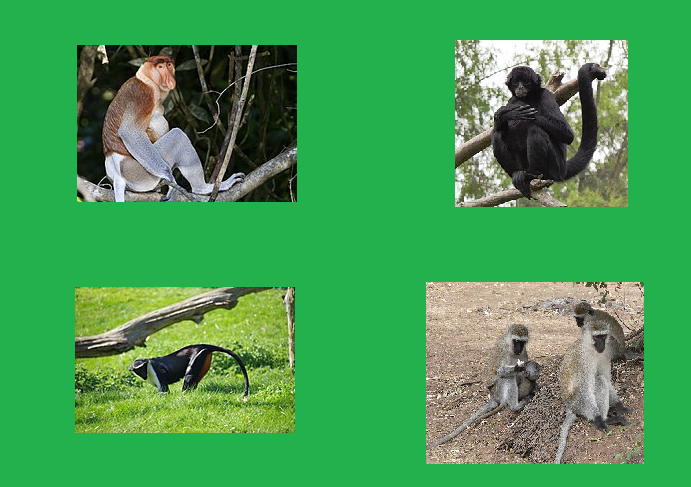
Which of these monkeys can swim? The proboscis monkey, the spider monkey, the Diana monkey, or the vervet monkey? Give it a think. Back in a buzz!

(Tizzy flies back to Stinky and Jake, who are having a hard time finding the answer)

Jake: Well, I don’t think any of them can swim.

Stinky: I can’t think with my tail freezing over.

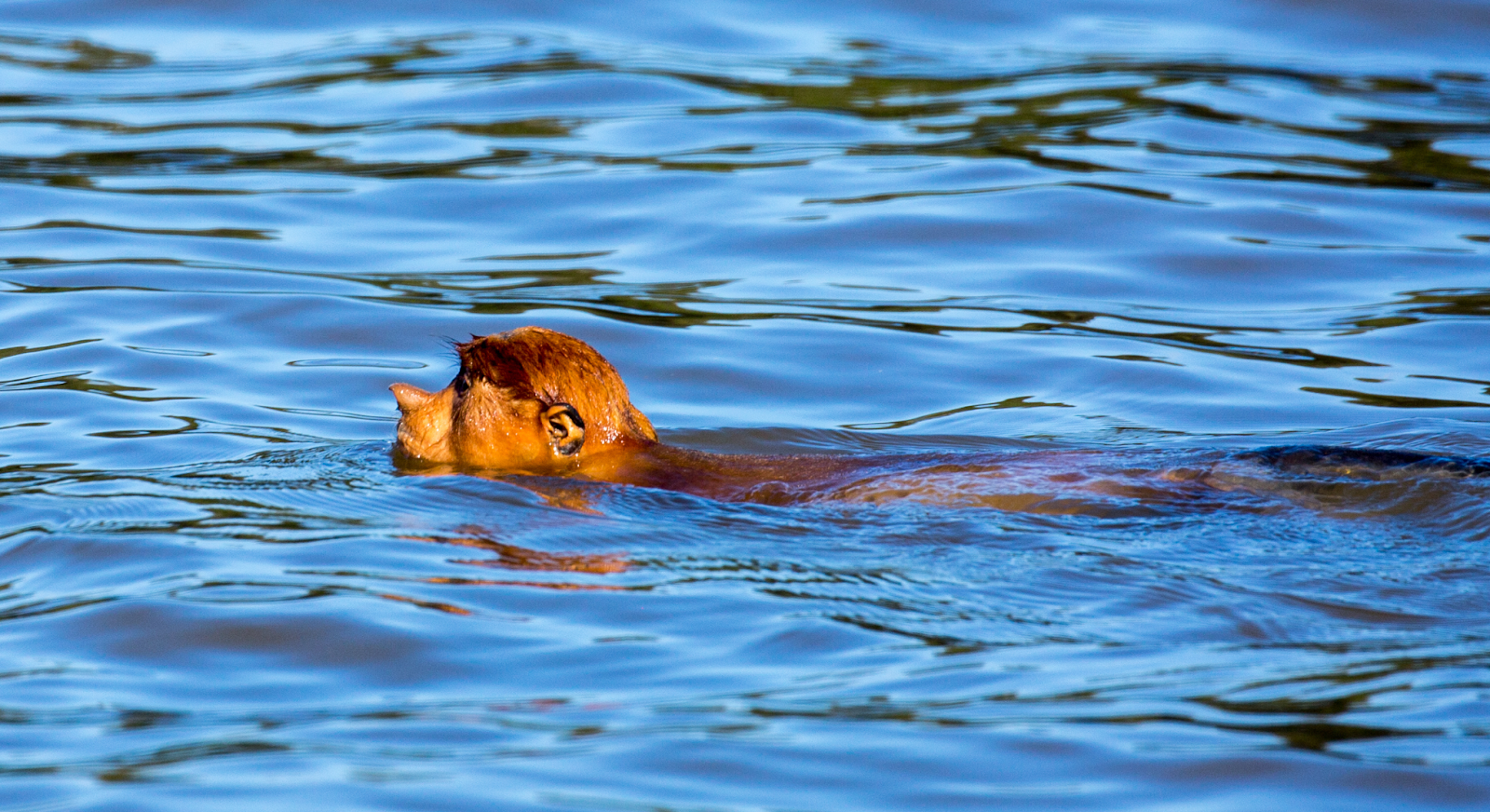
Tizzy: Well, here’s the answer. The proboscis monkey from Borneo is one of the best monkey swimmers out there. Bee-lieve it!

Proboscis monkeys use their swimming skills to outpace crocodiles, which eat these monkeys. They usually live in trees, but will come down occasionally in search for food. Proboscis monkeys also sleep near rivers and ponds. Bee-lieve it, because it’s true!

To be continued in Part 2...

Monday, February 12, 2024

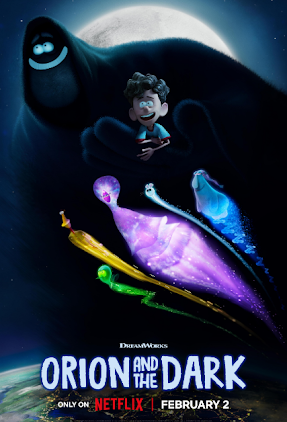
Movie Review: Orion and the Dark

Movie Review: Orion and the Dark                                                                                                    2-3-24

WARNING! THIS REVIEW HAS SPOILERS FOR ORION AND THE DARK!

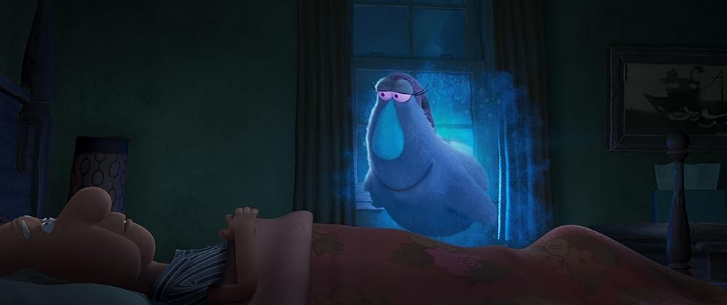
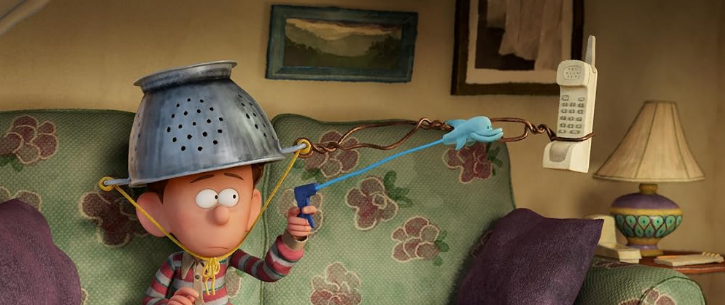
This movie is about a boy named Orion, a boy who’s afraid of everything. One day, he meets the Dark, a giant black character who’s actually a very nice guy. With his friends, including the Muppet-like Sleep, the insect-like Insomnia, the mouse-like Quiet, the robotic Unexplained Noises, and the bioluminescent Dreams, they show Orion that there’s nothing to fear but fear itself.

Orion and the Dark is a great way to start the new year with a compelling story, a unique art style, engaging characters, and top-notch voice acting.

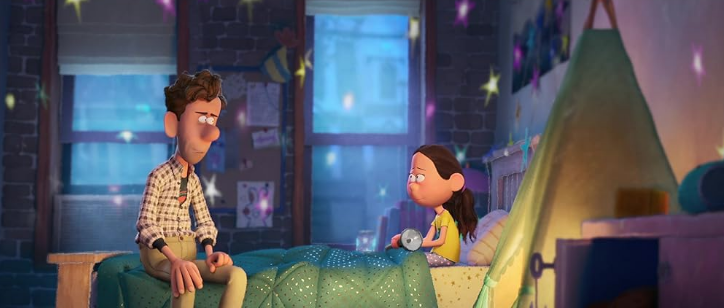
In a similar fashion to The Princess Bride, the story in the movie is actually a bedtime story that Orion (depicted as an adult) tells his daughter, Hypatia. While we know from the gecko that The Princess Bride is a story within a story, it takes about 17 minutes into the movie to find out that Orion’s adventure may not be true after all. I’m not saying it’s a bad thing: It’s just something that I haven’t seen before.

Another thing to point out is that while ‘Orion’ is a DreamWorks movie, it doesn’t really take place in modern times or have any pop-culture references. The only other times DreamWorks did this was with Kung Fu Panda, How To Train Your Dragon, Rose of the Guardians, and the 2D films.

If I were to complain about one thing, I felt that the pacing was a bit slow. However, this is justified since it’s Orion telling Hypatia a bedtime story.

In conclusion, even though it skipped theaters like jump ropes, I’m more than willing to watch Orion and the Dark again for DreamWorks’ 30th anniversary later this year. It’s a good movie to show kids who are afraid of the dark.

Rating: 3.5 stars out of 5

Wednesday, February 7, 2024

The Animal Show- Axolotl and Lobster Part 2

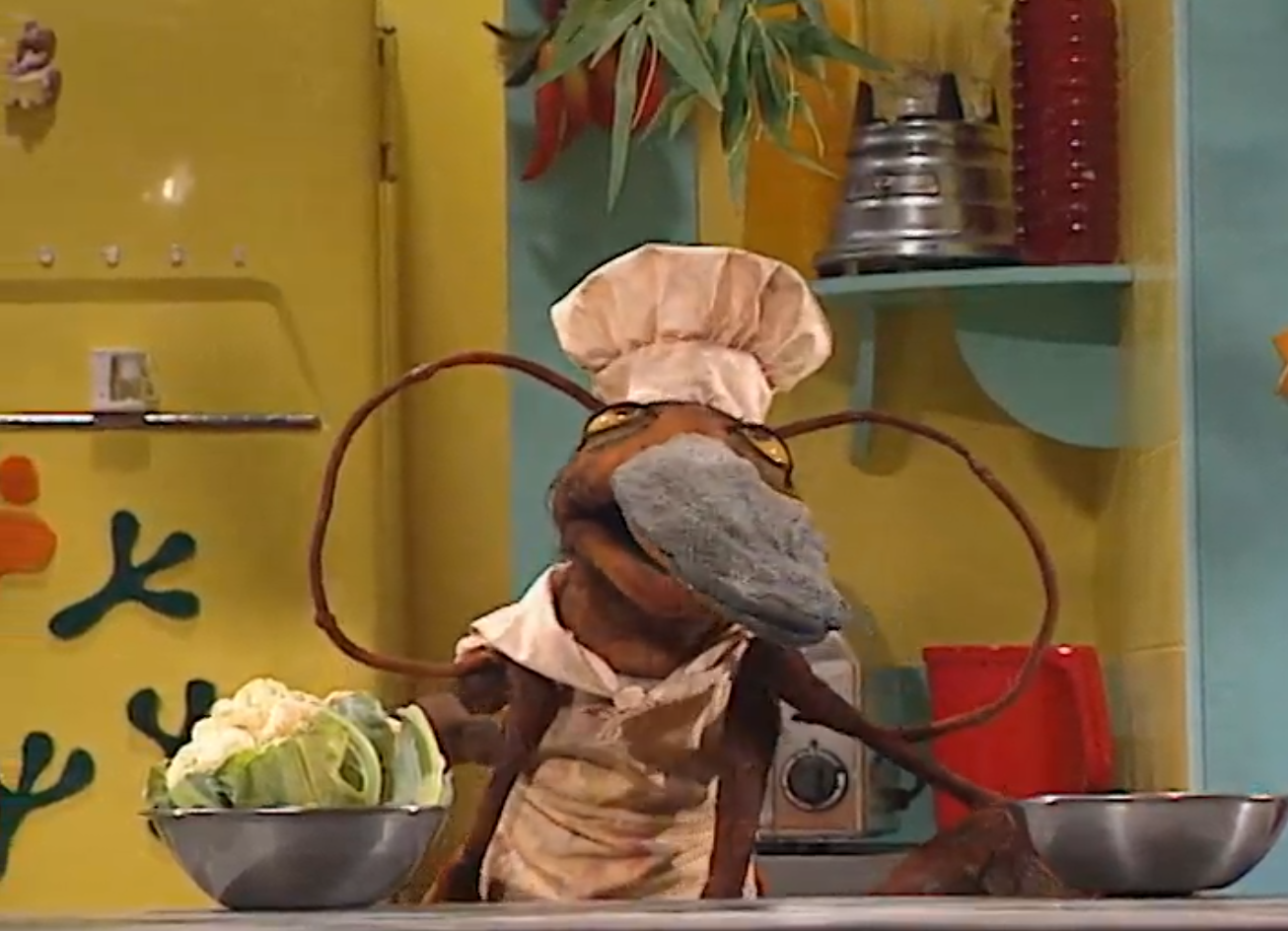
Jake: And now, let’s see what’s cooking in the kitchen with Yves St. La Roche.

(cuts to Yves in his kitchen)

Yves: Bonjour, bonjour little animals out there! Today, we will make clam chowder. First, we need a clam, and luckily for today, I have a hole in the floor with water inside. Maybe we will find a clam! (pulls out a fishing rod and starts fishing) Let’s see what we’ll get. Oh, I felt a pull! (pulls out an empty soda can) An empty can? This will never do! (throws it behind him) Oh, another pull! (pulls out a crab) It’s the same crab from the camouflage episode. Maybe he’ll be more cooperative this time. (the crab pinches Yves’s hand and escapes) Another pull! There must be a clam this time. (pulls out an oyster) Not just a clam, an oyster! You will make great chowder. (the oyster closes itself on Yves’s nose) Well, at least we have the main ingredient. Excuse me while I go to the doctor to get this bugger off.

(cuts back to Stinky and Jake)

Jake: And now, from the oceans of the world…

Stinky: World.

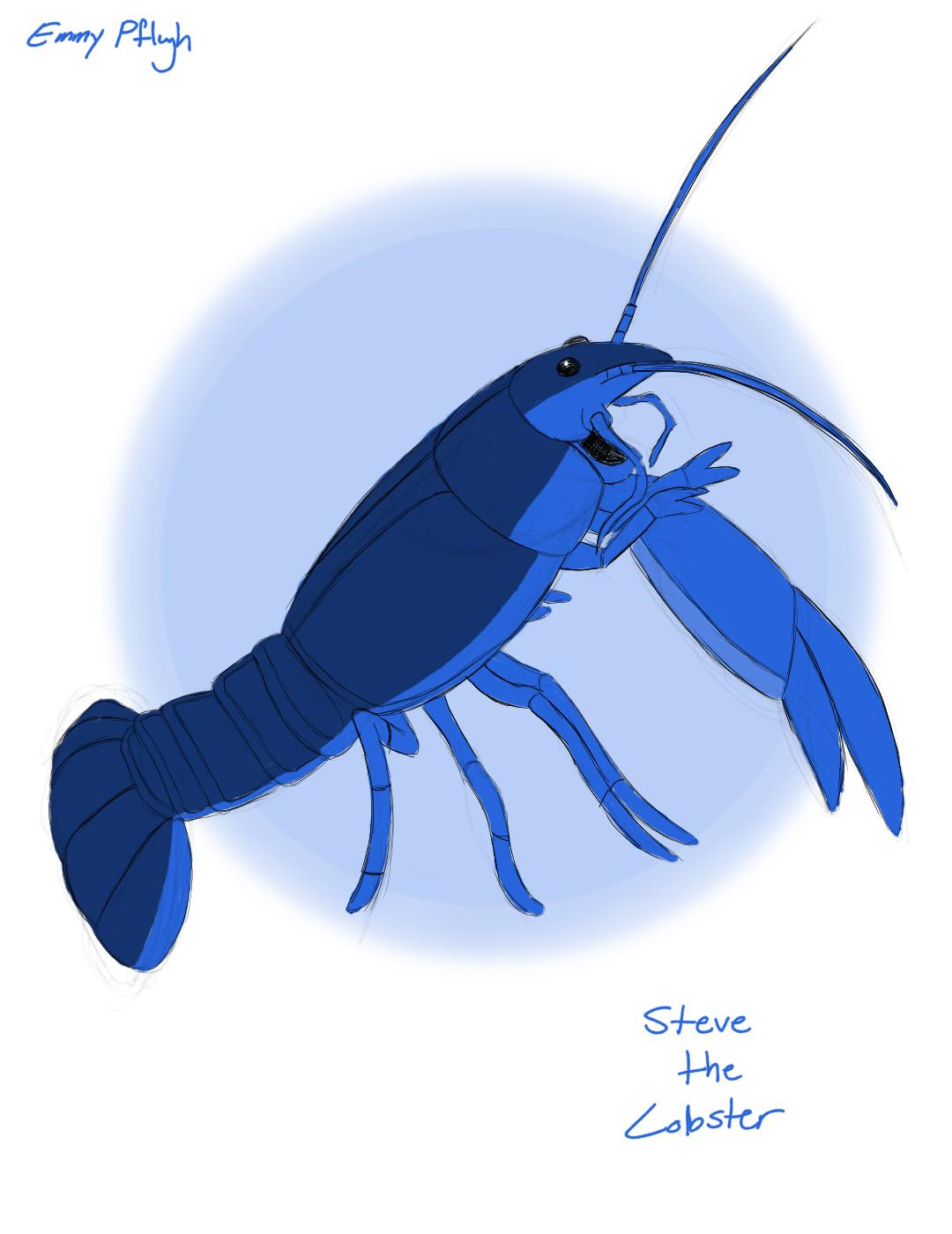
Jake: Please welcome Steve the Lobster!

Steve: Hi, Stinky. Hi, Jake. I bet you’re wondering what happened to my left claw, I lost it in a fight with another lobster, but please don’t worry! My claws and legs always grow back.

Stinky: Shouldn’t you be in water?

Steve: We lobsters can survive some time without water.

Jake: Do you have any videos about lobsters, Steve?

Steve: Do I ever!

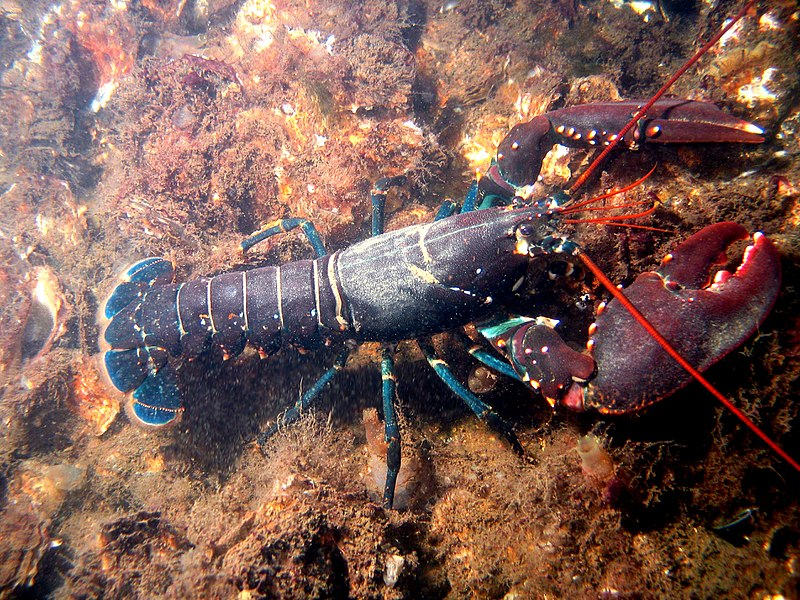
Stinky: Hey, I thought lobsters were red. That guy’s black, and you are blue!

Steve: Only when we’re cooked by humans. Lobsters are naturally blue or black.

Jake: You use your claws as weapons, right?

Steve: Uh-huh. We deliver a powerful pinch, so you better be careful when handling a lobster!

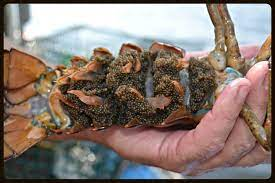
Another thing about us lobsters, we care deeply about our children. So much so that my wife carries the eggs on her tail, like so!

Stinky: Shouldn’t your wife give that human a pinch?

Steve: Don’t worry about her. Humans never capture lobsters carrying eggs.

Jake: And how long does it take for a lobster to reach adulthood?

Steve: As many as seven years. Sorry if I sound off-topic, but can I sing a song?

Jake: Yes you may. And now, here’s Steve singing ‘The Lobster Song'.

Steve: Being a lobster can be tough

Especially when the other animals are rough

There are many animals that want lobster dinner

But a pinch from my claw will make me a winner!

Sometimes, however, my claw or leg gets ripped off

But there's no need to cry in a cloth!

But after five years, it's as good as new

It even works when I only have legs of two!

And the best part of all, I saved for last

Because I know it's a blast

While other animals leave their eggs by themselves

We put ours underneath our shells!

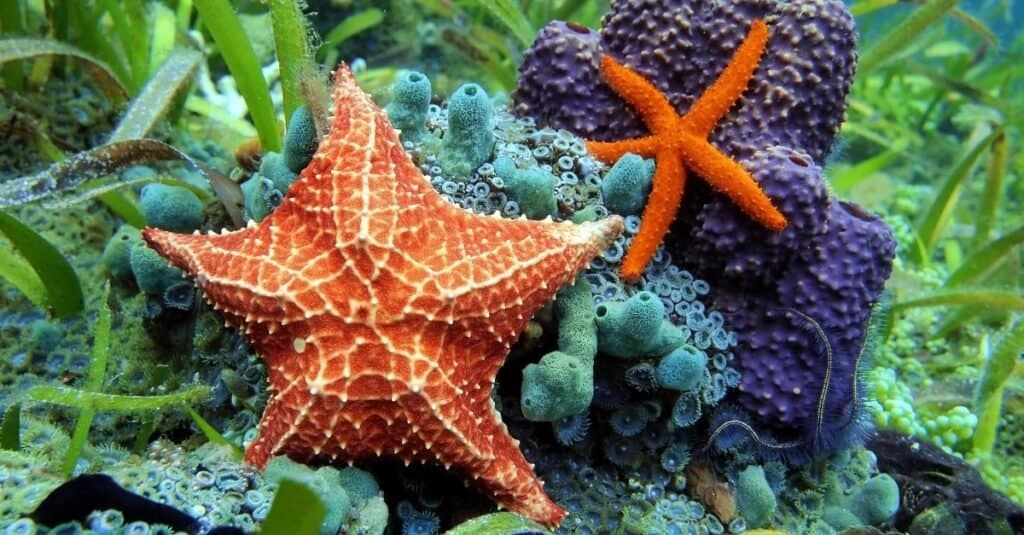
Bunnie: And now it’s time for the Animal Awards! Today, the animal with the best regeneration. Could it be… The starfish?

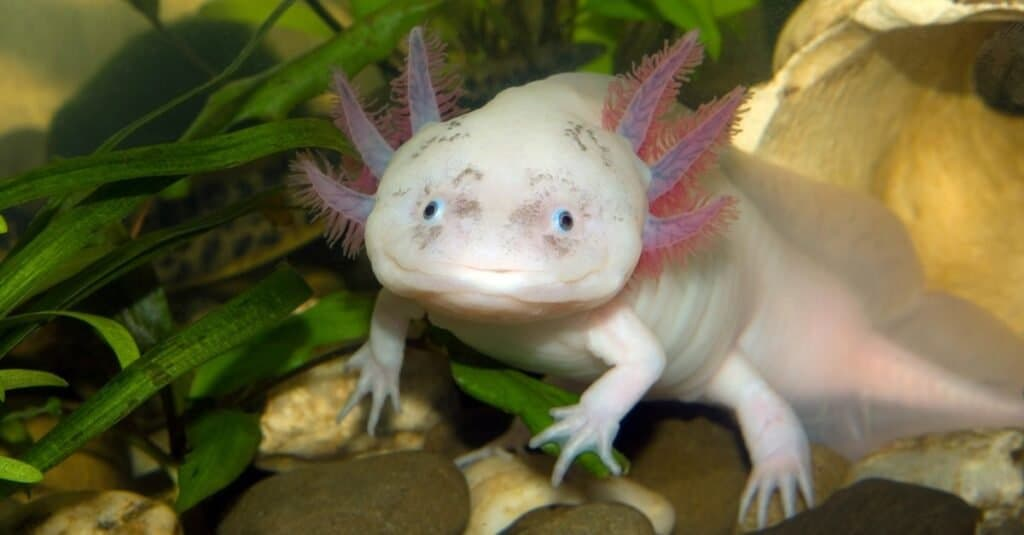
Armstrong: The axolotl?

Bunnie: The lobster?

Armstrong: Or the deer?

Bunnie: And the winner is… The starfish! When one of its arms gets cut off, it not only grows back, but the dismembered arm turns into another starfish!

Armstrong: That’s cool and creepy at the same time.

Bunnie: Back to you, Stinky and Jake!

Jake: And now, it’s time for a story. “Once upon a time, there was an anole named Andy. Andy had a very long tail for an anole, and he was proud of it. One day, however, he was chased by a raccoon. ‘You’ll make a nice tasty snack!’ Said the raccoon, and he chased Andy all over the swamp. He grabbed his tail, and was ready to eat Andy, but then he remembered that his tail can be torn off if necessary. Andy let the raccoon tear off his tail, and he quickly climbed up a tree. ‘I may have lost my tail, but at least I still have my life. Besides, it will grow back!’ Soon, Andy’s tail grew back, and he lived happily ever after. The end.”

Stinky: That was a good story, Jake. Now that you think about it, regeneration sounds cool, though skunks should not try it at all.

Jake: Or bears.

(cut to Armstrong and Bunnie in front of the habitat door)

Bunnie: Okay, Armstrong. It’s Habitat Time, and today, we’re going to Mexico City!

Armstrong: A city? As in humans around every bend?

Bunnie: Exactly, but if you look hard enough, you’ll see some cool animals!

Armstrong: Alright. Besides, I’ve been told that falcons live in the city.

Bunnie: Then let’s go! (opens the door, and they end up in Mexico City)

Welcome to Mexico City, the largest city in the country!

Armstrong: You can’t have a city without rats.

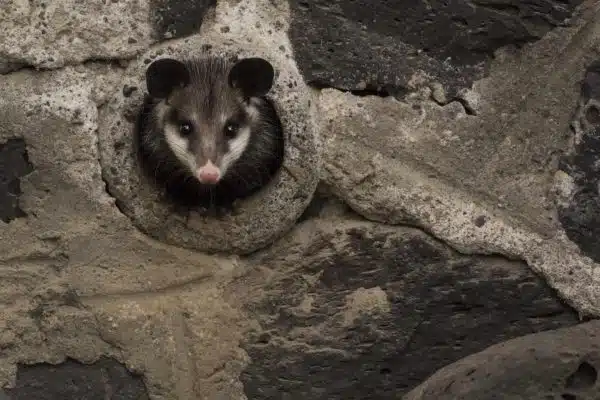
Bunnie: That’s not a rat, that’s a possum! They’re the only marsupials that can be found outside of Australia.

Armstrong: Oh. I knew that.

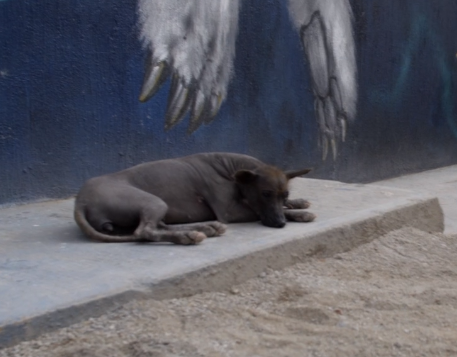
Oh, that’s just another dog.

Bunnie: That wasn’t just another dog, Armstrong! That’s the Xoloitzcuintli, or a xolo dog. The Aztecs believed that these dogs guided those who died through a place called Mictlan.

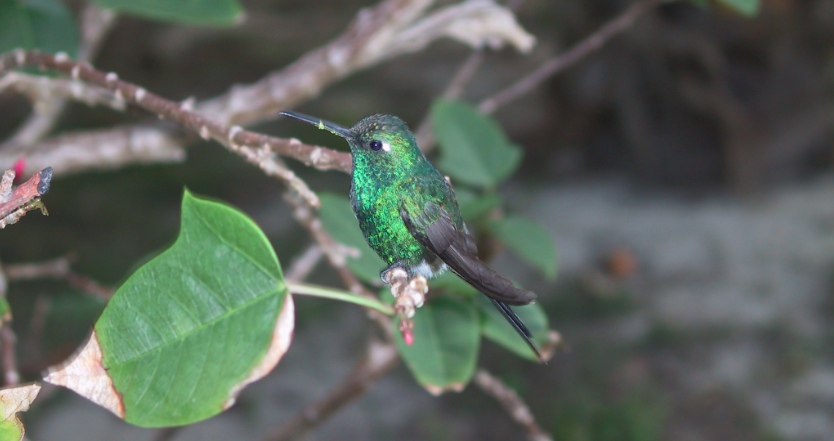
Armstrong: A hummingbird in the city?! Now I’ve seen everything.

Bunnie: Even though Mexico City is one of the most polluted cities on Earth, there are over 22 hundred different wildlife species!

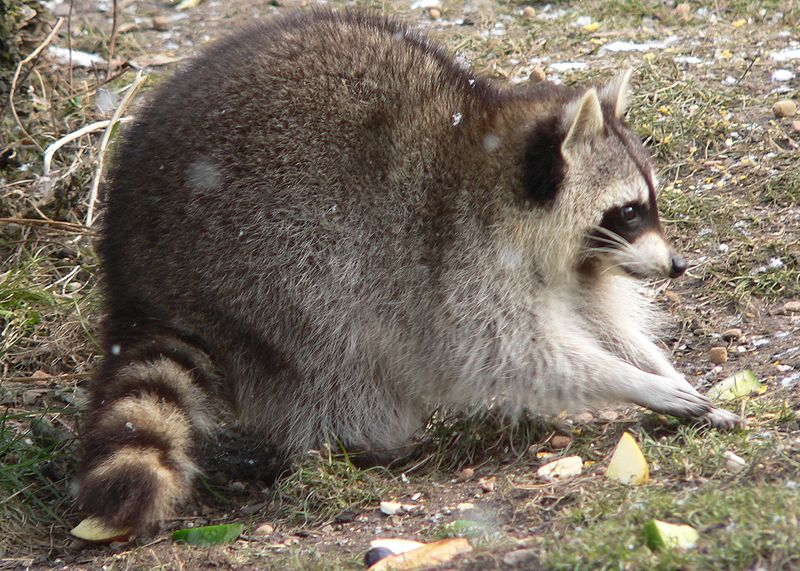
Armstrong: I know what that is: It’s a raccoon! But I thought raccoons were only found in America.

Bunnie: Not quite, Armstrong. Raccoons also live in Canada, Mexico, and even South America. They also have relatives in China called the red panda.

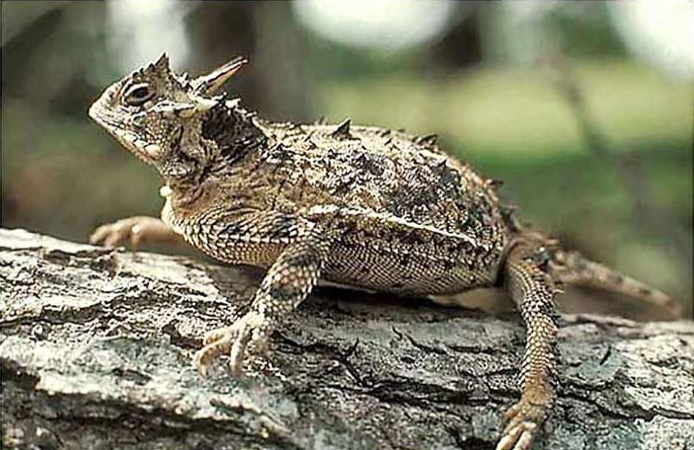
And here’s a horned toad.

Armstrong: What are you talking about? That’s a lizard. Toads are basically frogs if they never got kissed by humans.

Bunnie: Horned toads are a type of lizard, Armstrong.

Armstrong: Well, you learn something new every day!

Bunnie: And once again, we have to head home.

(Bunnie and Armstrong leave Mexico City and head back to the Animal Show studio)

Bunnie: For Habitat Time, it’s Bunnie Bear-

Armstrong: And Armstrong the chickenhawk.

Bunnie: Just back from Mexico City.

(Tizzy flies around Stinky and Jake again)

Tizzy: Quiz time!

Jake: And what’s the quiz this time?

Tizzy: Well, here it is! (cuts to the screen below)

The question is can lobsters live in saltwater? Give it a think. Back in a buzz!

(cut back to Stinky and Jake, who are having a hard time finding the answer)

Stinky: My answer would have to be no. What do you think, Stink?

Jake: I already forgot the question.

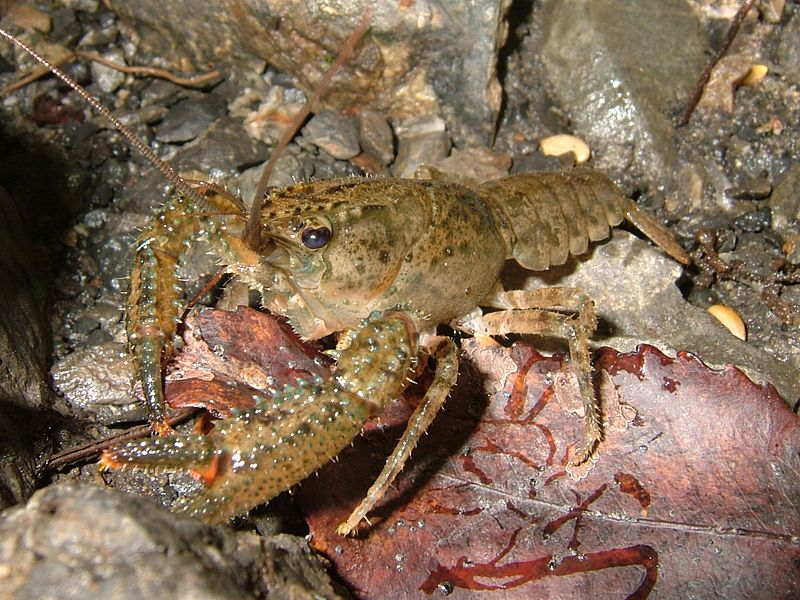
Tizzy: Maybe you should hear the question again. (flies back to the previous scene) Can lobsters live in saltwater? The answer is no, but they do have a freshwater relative: The crayfish, which looks like this. Bee-lieve it, because it’s true!

Jake: Thanks for the quiz, Tizzy. That's all the time we have today, and until next time, keep seeing the world through the eyes of animals. Bye!

Author's Notes: The human showcased in Tizzy's first quiz is, in fact, my partner Emmy Pflugh!

This isn't the first time Yves St. La Roche had a bivalve close itself on his nose. In the episode 'Elephant and Hunting Dog', Yves got his nose caught on a clam when he demonstrated how some animals use their noses to find food.

Steve the Lobster is named after Muppeteer Steve Whitmire, while his design is based on the lobsters that would appear from time to time on The Muppet Show.

Baby lobsters courtesy of National Geographic.

Next week, you'll learn about how some animals live in cold habitats when the guest animals are a snow monkey and a puffin!